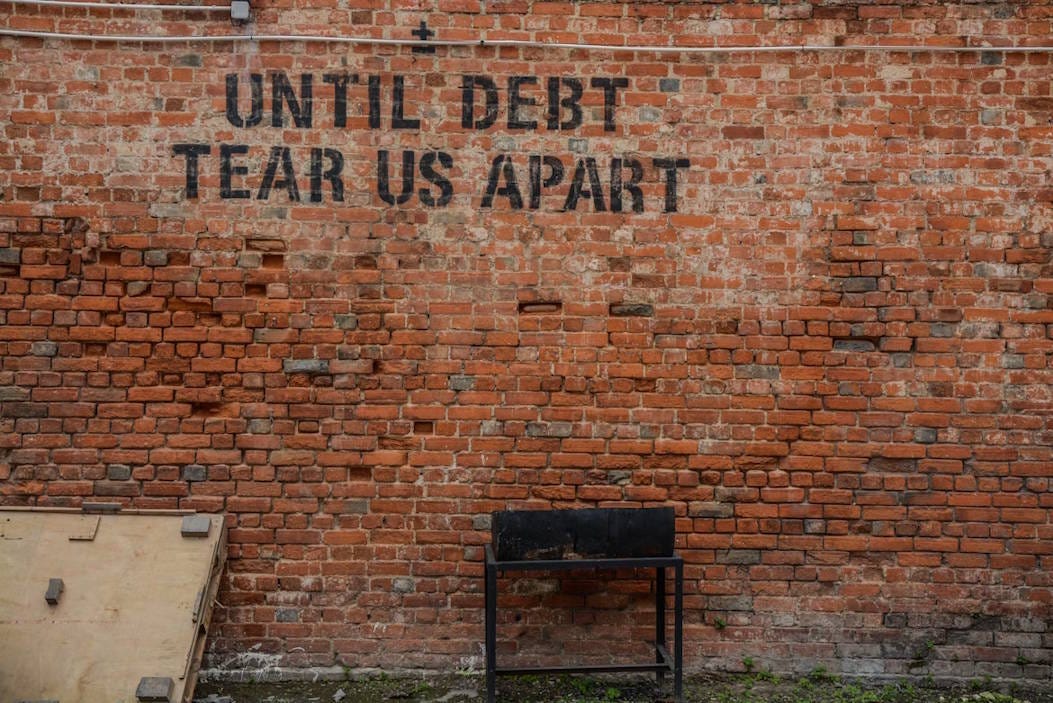
There is a pernicious and persistent pattern among many partisan pundits and politicians, pertaining to public debt. When their own party is in power, they minimize or ignore the problem, but as soon as the other guys win the presidency, they start shouting that the debtpocalypse is upon us.
Do I follow this pattern? Maybe a little bit. As recently as 2022, in Biden’s second year as President, I was not very worried about U.S. government debt. My reasoning was that A) interest rates were going to go back down after the surge in inflation had ebbed, preventing borrowing costs from getting severe, and B) Biden-era inflation had eroded some of the government’s debt burden.
But I still warned that there was some limit to government borrowing — eventually, at some difficult-to-predict point in time, too much debt would cause first interest rates and then inflation to soar. And I warned against listening to “fiscal arsonists” like the MMT folks, who aggressively advocated for higher government deficits.
And by 2023 — still under Biden! — I was starting to worry a lot more. Interest rates weren’t coming down much, making austerity more necessary — except no one, including Democrats, was talking about austerity. And by 2024 — still under Biden! — I was warning that there was no good reason for all the deficit spending we were still doing, and that continuing on our current path would run the risk of spiraling inflation:

So I definitely didn’t wait until Trump came to power to start worrying about the debt. But I do admit that under Trump, my worries have intensified. The Democrats listen to intellectuals — although the party has become more dominated by progressives who tend to worry less about government debt, there was always the possibility that concerted shouting by pundits like myself could shift the consensus among left-leaning think-tankers and staffers, who could then pivot the Dems back to the fiscal austerity of the Bill Clinton years.
Republicans — especially Trump and his movement — are a different beast entirely. They stopped listening to egghead intellectuals a long time ago, and even the finance-industry and right-wing think-tank types who have some residual impulse toward fiscal hawkishness have steadily lost influence as MAGA heads toward full cult-of-personality status. The only person in the Trump orbit who even talked about fiscal hawkery was Elon Musk, but this glimmer of hope1 faded when DOGE utterly failed to reduce government spending:


So when Trump returned to the presidency and DOGE flamed out, my mounting alarm turned to full-blown panic:

Anyway, it’s a year later, and I’m still panicking. Trump has been about as bad on deficit spending as Biden was (which is actually less bad than I expected him to be!), but a rise in long-term interest rates is making the debt less sustainable, and Trump seems uninclined to do anything about it. Nor do I expect rate cuts or AI-fueled growth to ride to the rescue here. As for Democrats, they’re playing with fiscal fire by proposing tax cuts for the upper middle class.
As I see it, the only hope here is to start scaring people. Bipartisan fear of deficits back in the late 1980s and early 1990s — probably spurred by high interest payments — forced every contender in the 1992 election to promise their own version of austerity. If we can raise the alarm now, there’s the possibility that both parties might be pushed toward fighting the debtpocalypse for populist reasons.
Government interest costs are exploding, and we’re borrowing more to pay the interest
A lot of economists will tell you that the government isn’t like a household, so you can’t think about government debt the way you think about your own mortgage or credit card debt. That’s very true. But there are still some similarities between governments and households, and one of them is that both have to pay interest on their debt every month. Debt, after all, is simply a promise to pay back a certain amount of money at a certain time, and monthly interest payments are part of that.
Government debt is a bit like a floating-rate loan. Yes, Treasury bonds and bills have fixed interest rates, but they’ve got to be rolled over when they mature. The average maturity of U.S. debt is a little less than 6 years. Interest rates started going up in early 2022, so we’re starting to see a big increase in monthly interest payments:
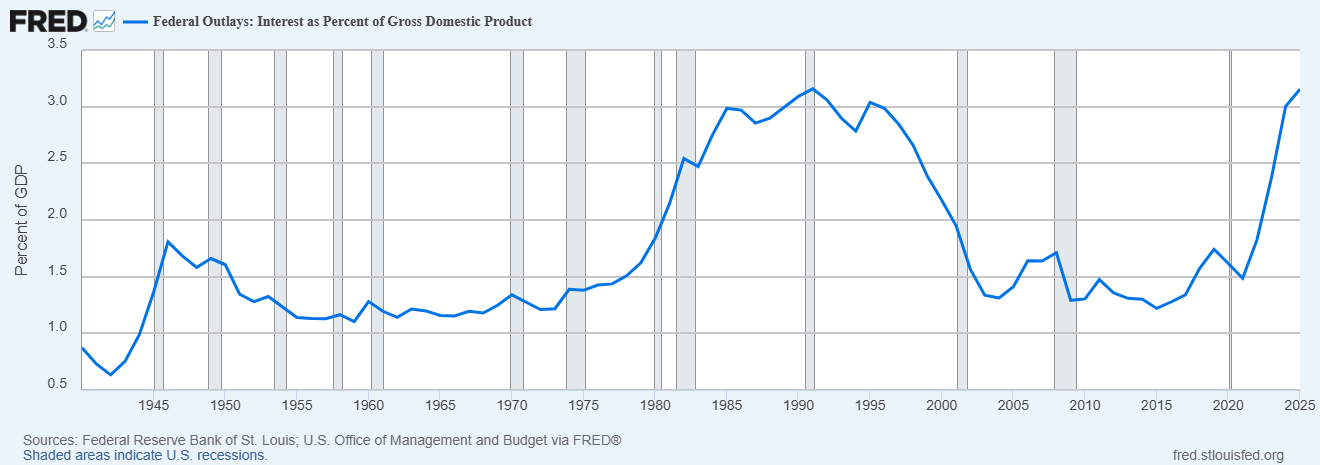
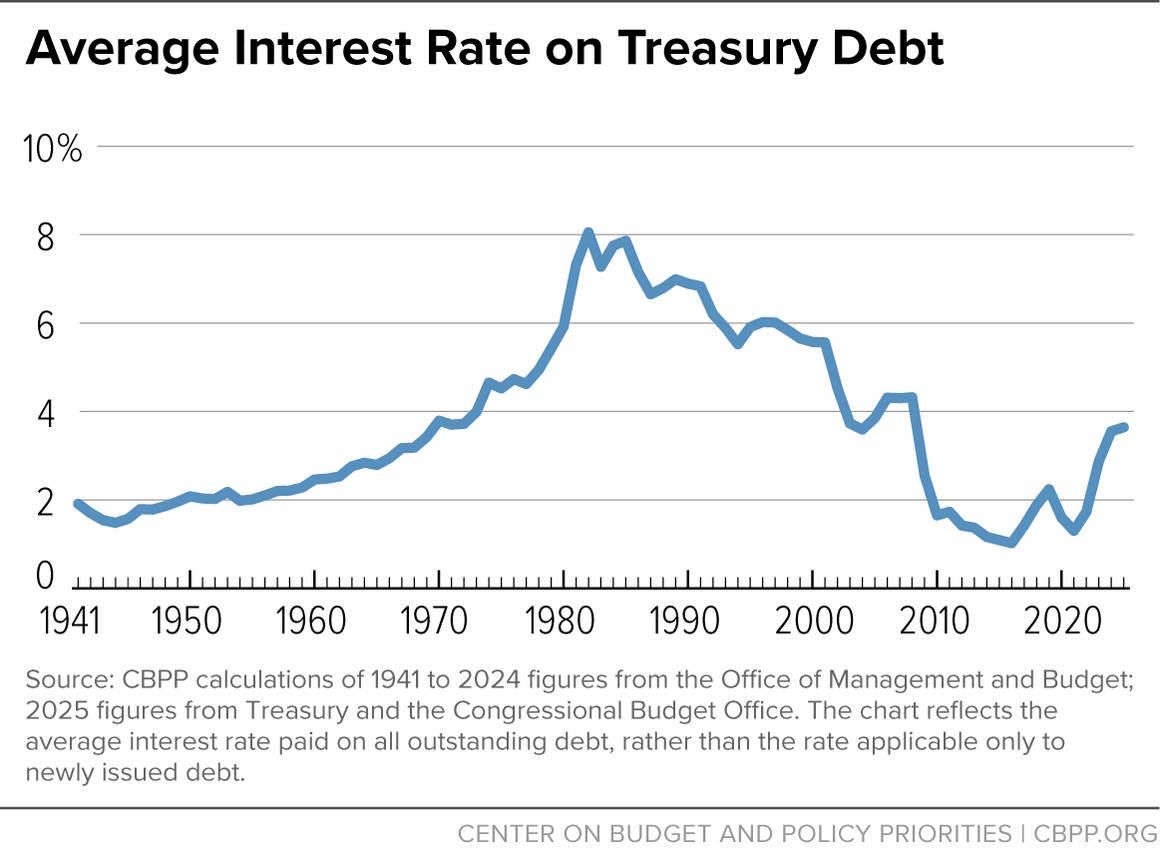
Everybody talks about how the U.S. had such high debt after World War 2, but the thing about that debt is that it was borrowed at very cheap rates — about 1.5-2%. That’s why interest costs stayed so low after the war. In the late 1980s and early 1990s, interest costs were high because interest rates were high, even though we didn’t have nearly as much total debt relative to our GDP.
As of 2026, we’re in double trouble. Our national debt is back up above 100% of GDP — similar to what it was right after WW2 (and much higher than in 1990). But now the interest rates our government has to pay on its debt are almost twice as high as they were after WW2:
High interest payments force the government to do one of two things:
fiscal austerity (spending cuts and tax hikes), or
borrow more to cover the interest payments.
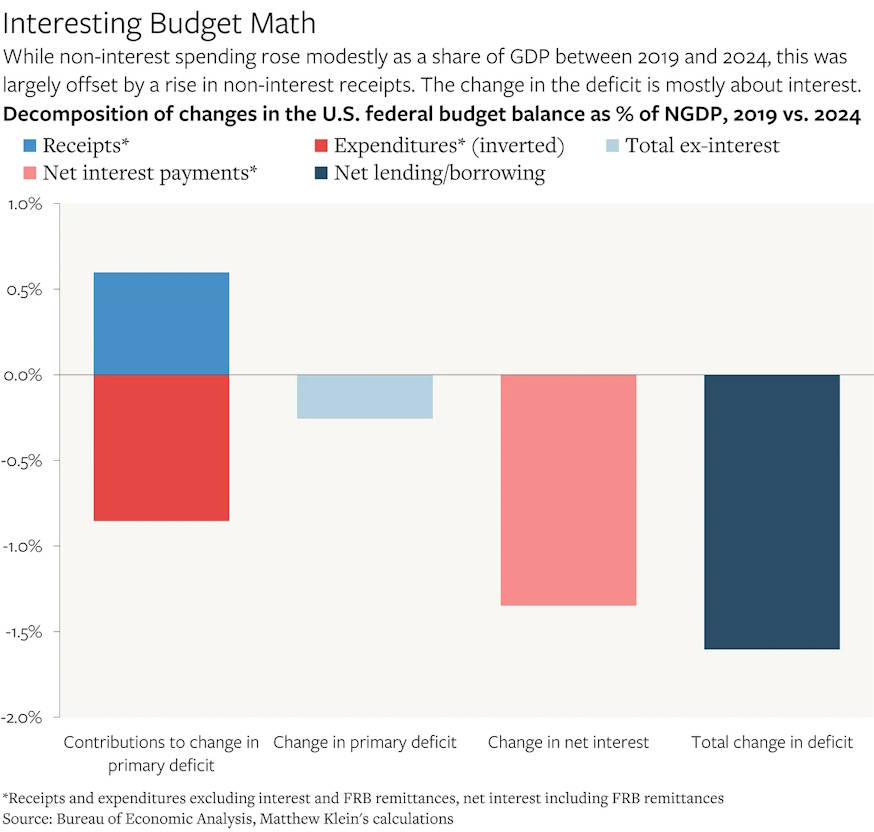
Right now, what we’re doing is (2). Almost all of the increase in the budget deficit from before the pandemic is due to higher interest costs:
Trump, as it turns out, has kept the annual budget deficit at about the same size it was during Biden’s term, relative to GDP:
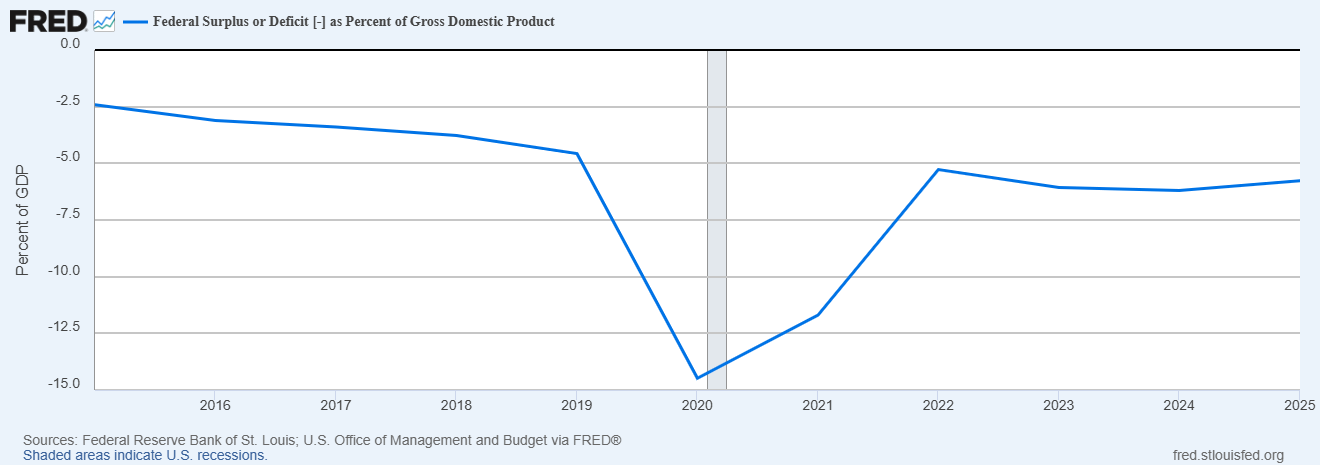
But things are worse under Trump than they were under Biden, for three reasons.
First, this is a very large annual deficit, and it’s all being borrowed at the new, higher interest rates. In addition, during Biden’s first two years in office, inflation eroded the debt.2 Inflation is back down to a fairly low-ish level now, meaning the debt isn’t getting eroded. And finally, interest rates have now been high for long enough that the debt Trump borrowed in his first term to pay for Covid relief is now being rolled over at higher rates.
So right now, the national debt continues to explode, because the government is borrowing money just to pay the interest on the money it borrowed before. This increased debt naturally results in even greater interest costs, forcing the government to borrow even more to fund those interest payments. And so on. Interest payments and debt just go to the moon.
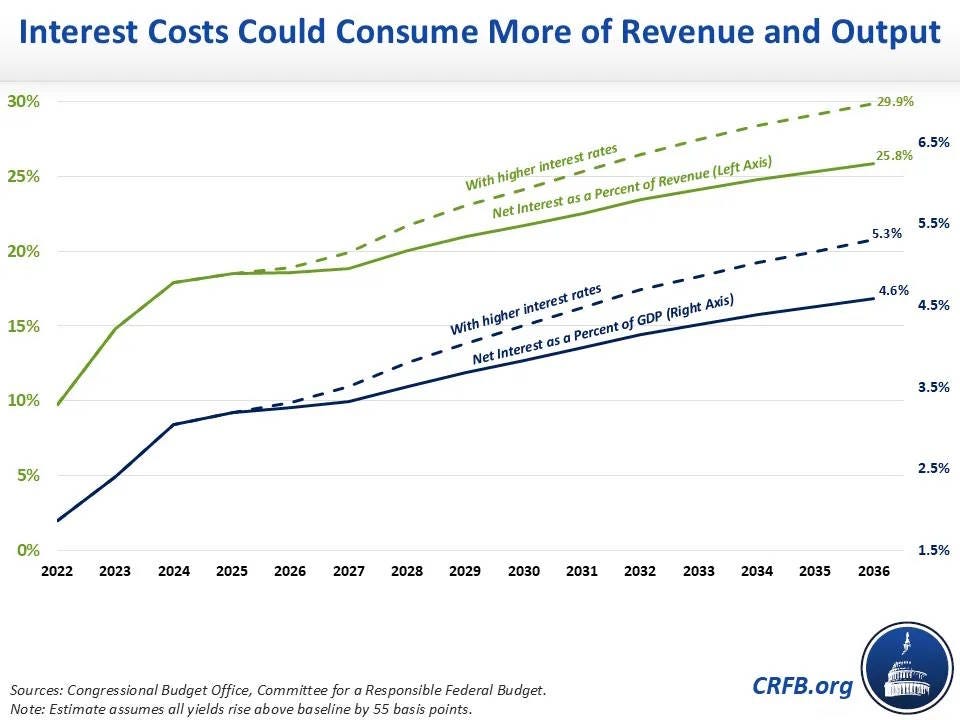
This isn’t some far-future scenario — it’s happening right now. But unless something changes, it’s going to get a lot worse: