


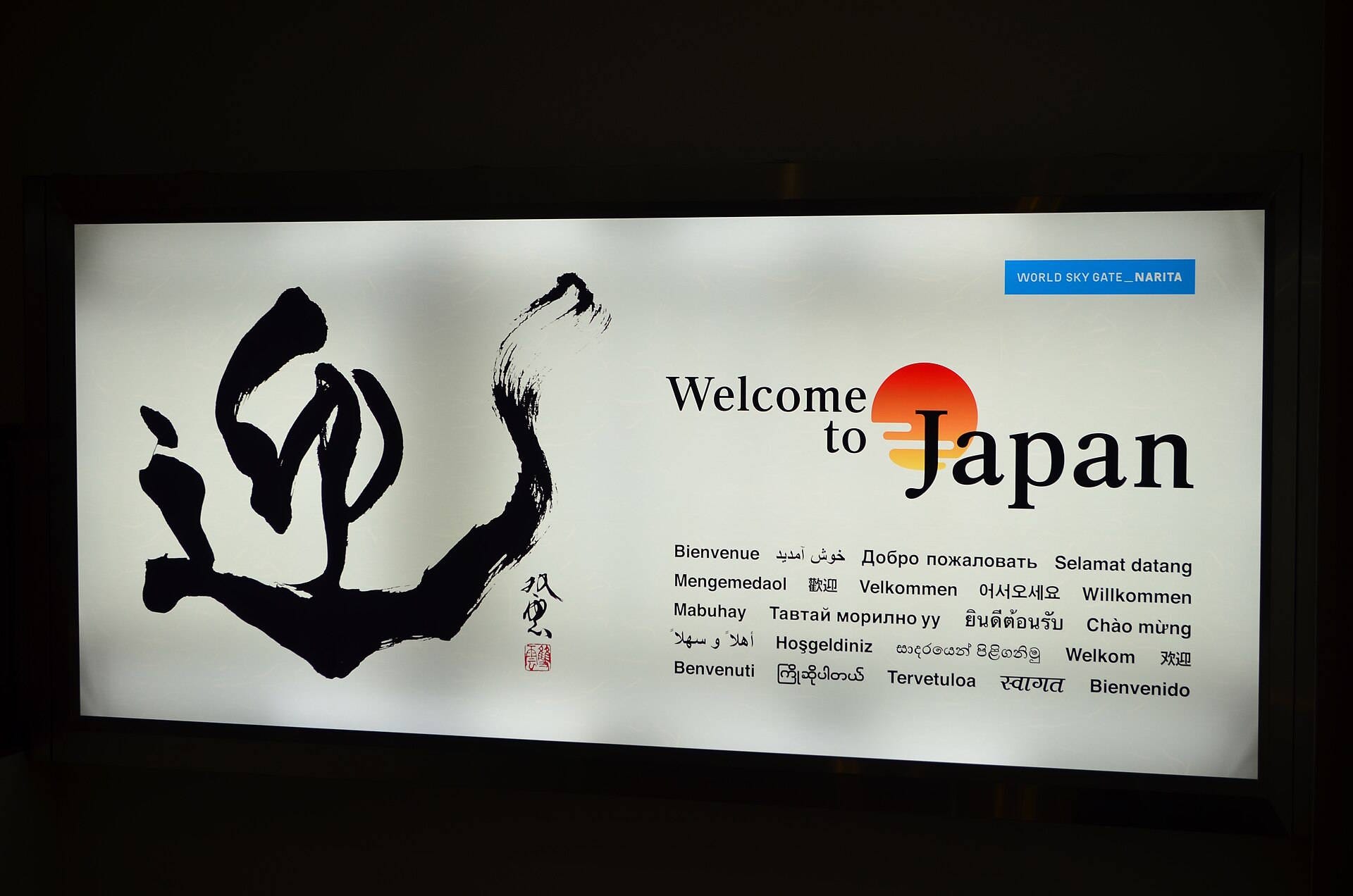
As birth rates fall and countries turn to immigration to address their labor shortages, a lot of countries around the world are struggling with crises of national identity. Japan is one of them. Over a decade ago, Japan began opening itself up to mass immigration:

Because Japan did this later than other rich nations, immigrants aren’t yet as numerous as in Europe or the U.S., but the percentage is rising fast. And so discussions about what it truly means to be Japanese are starting to emerge.
I thought it would be useful for my readers — most of whom live in America or other English-speaking nations that are going through their own crises of national identity right now — to get some perspective on how Japanese people think about these issues. And so I asked my friend Hiroko Yoda to write me a post about it. Hiroko is a Japan-based entrepreneur, cultural historian, and writer. She's the author of a new book, Eight Million Ways to Happiness, which is a memoir exploring Japan's modern secular-spiritual landscape. She also writes on Substack.
In this post, she writes about how shared culture, rather than adherence to a particular religious doctrine, is what binds Japan so tightly together. Interestingly, “culture” is the same answer I arrived at when I asked the question of what will bind America together in the future.
Although I live in Japan, as a Japanese person married to an American, and who studied at American universities for my undergrad and graduate degrees, I probably pay more attention to happenings in the U.S. than many Japanese people. One of the topics I have found most interesting is the ongoing struggle to define what an American is. The reason being, we Japanese are grappling with this issue as well.
As Noah has written, Japan is accepting more immigrants than ever before. When my husband and I moved to Tokyo in 2003, international couples were still uncommon, and we’d sometimes draw stares if we walked hand in hand. These days, it’s completely unremarkable. The numbers of tourists visiting Japan increase year by year, and so does the number of people taking permanent residence. I see many international families in the suburb where we live, and I don’t think we are unusual, at least as regards urban centers.
As Japanese are finding new ways to co-exist and live alongside non-Japanese, they are also revisiting what it means to be Japanese. As I’ve written in my own newsletter, the question once centered simply on ethnicity, but now many are coming to believe that shared cultural values are more important.
Are you Japanese simply because of where you were born, or are you Japanese because of how you participate in society? Superficially, this resembles the arguments going on in America. Are you American because of some kind of heritage, or are you American because you embrace shared values, like those laid out in the Constitution?
But there is an interesting difference, too. Japan is (or was) a country with relatively little immigration; that’s why the question of who’s Japanese traditionally hinges on ethnicity. On the other hand in America, an immigrant melting pot, the litmus test often seems to return to faith.
It comes up again and again in American discussions about what it means to be American. Take this recent essay from The New York Times opinion writer Ross Douthat:
One doesn’t need to be a specific kind of religious believer to be a good believer in the Declaration [of Independence]. But if you look at the sweep of American history, it’s very hard to disentangle the advance of equality from the religious belief that our rights come from God and that human beings are equal in his eyes… it has more power in a context where most Americans believe in a providential God.
And then there’s Derek Thompson, who in a recent conversation with religious scholar Ryan Burge, noted:
There’s this category of Americans who have gone into religion as if it’s a foreign country, harvested certain souvenirs, and brought them back to the world of secularism. They practice yoga but have no interest in understanding its religious origins. They meditate but are not remotely interested in any Buddhist version of nirvana.
To which Burge replies:
They only wanted the parts of religion they liked and left the others behind…
You can’t just pick and choose…A lot of people are doing that with religion right now. They’re walking down the buffet line, picking one piece, putting it on their plate, and calling it a spiritual life. That doesn’t endure.
And Thompson concludes:
If you don’t have that central spine of purpose, the community won’t last. If your only purpose is “let’s get together,” that’s not enough. You need that higher purpose—that vertical spine—in order to build a truly strong horizontal community.
These pundits are arguing that ideas alone – the values of the Declaration of Independence or the Constitution – aren’t enough to keep Americans together, whether in communities or as a country. America’s loneliness epidemic, its polarization, its young citizens’ loss of hope: a big part of it can be attributed to the fact Americans don’t go to church or synagogue or temple or what have you anymore.
All of which makes me want to say: have you ever been to Japan?
Japanese, as a nation, don’t subscribe to any one faith. In fact, there’s a popular saying “born Shinto, married Christian, buried Buddhist.” We pick and choose, bringing what we like from various traditions – the purifications of Shinto, the pretty aspects of Christian weddings, the traditions of Buddhist funeral rites – into our secular lives. We’re so flexible about it that we often answer no when people ask if we’re religious. Look at this chart:
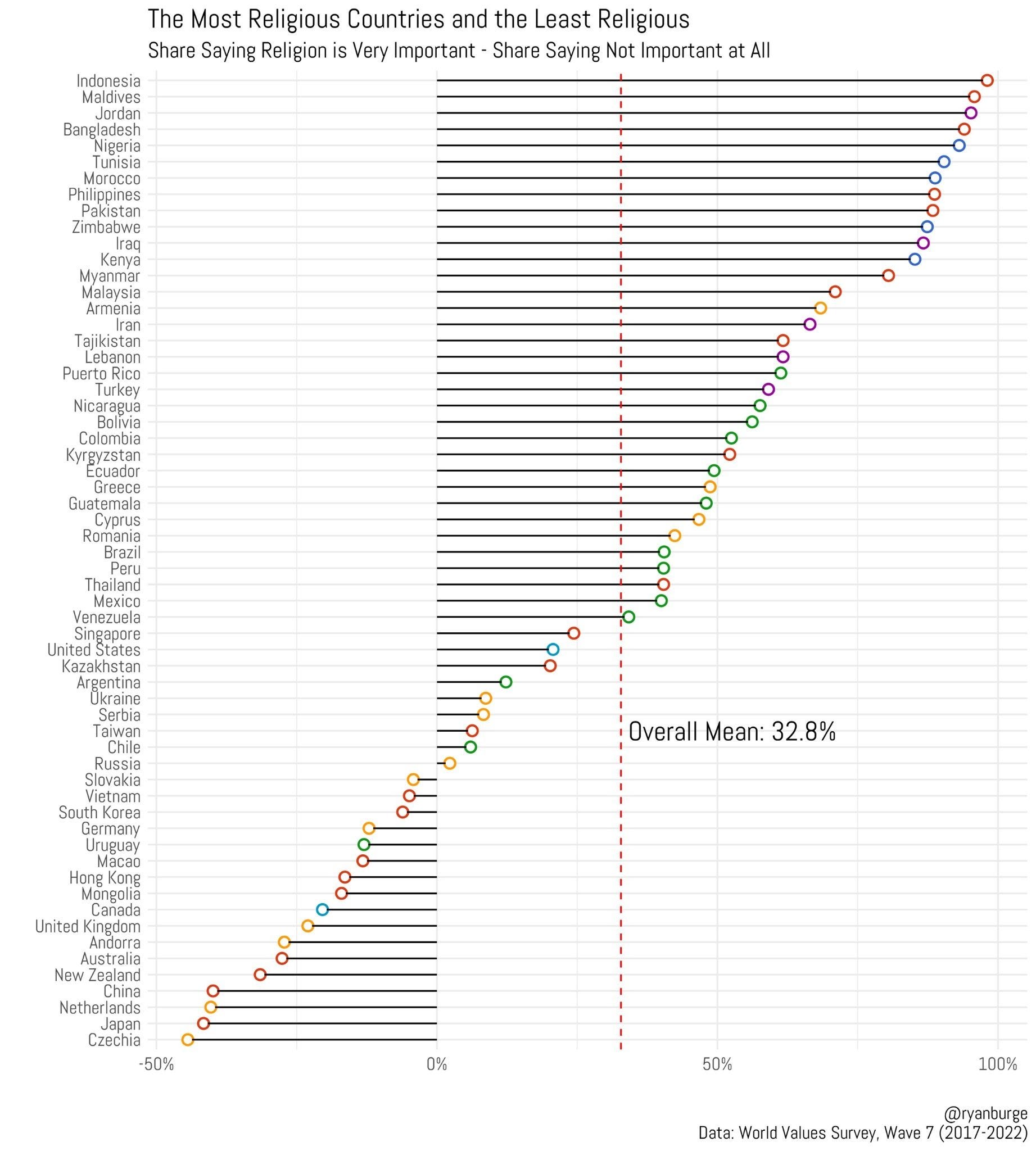
I’m going to put aside the question of how accurate this is. I actually wrote an entire book on how I believe surveys like this can miss the forest for the trees. (Spoiler: it involves how one defines “religion.”) But Burge and others argue Americans are “setting themselves up for failure” in becoming less religious, or at least in not going to religious institutions.
America is a flexible society that is rigid when it comes to religion; Japan is the opposite, a rigid society with a surprising flexibility when it comes to faith. There’s an old phrase that sums up Japan’s traditional spiritual cosmology: yaoyorozu no kami, which means eight million deities. It isn’t an accounting; it’s an expression of awe at the infinite nature of the sublime in all its forms. It incorporates, absorbs, rather than draws lines. In short, it’s radically inclusive.
I get that America is a religious country. I was taken to Sunday school every week when I was a homestay student in Indiana in the 1990s. I recited the Pledge of Allegiance alongside the other students every day. But there’s no pledge of allegiance in Japanese schools. The Japanese flag wasn’t even displayed in any of my classrooms. None of my classmates ever went to anything resembling a Sunday school.
But we were united in other ways. Ways that look like faith to outsiders, but just felt like everyday life to us. We made New Year’s visits to shrines or temples for hatsumode, a first prayer for the year. Many of us had Buddhist-style altars in our homes, where we kept photos of departed family members. Many of us carried omamori, Shinto or Buddhist amulets for scholarship or travel safety on our schoolbags.
But if you’d asked the majority of us what our faith was, or who we were praying to, we’d have reacted with utter confusion. None of us saw amulets as a replacement for studying, or looking both ways before crossing the street. They were simply cute ways to wish. If you’d asked us what we believed, I honestly don’t think we would have even understood the question. We just did.
So if institutional faith is core to the communities that form a healthy society, why is Japan’s so successful without it?
First, let me be clear here. I don’t see Japan as some kind of utopia or even a role model. I just see it as different. But the fact it is different – and not struggling in the ways many commentators seem to think America is struggling, at least regards faith as an identity – is what might make the Japanese counterpoint relevant. Let me also be clear that I believe faith can nurture a life or a community. If your personal faith nourishes you, I cheer you on.
But speaking broadly, if Japan can maintain a stable society without faith, it would seem to indicate it isn’t a necessity for a healthy society.
So what is keeping Japan together?
For a long time, Japanese could rely on clear lines to define themselves, like language (Japanese being little spoken outside the nation) and terrain (being an archipelago). But things are changing, and changing fast. It isn’t particularly difficult to get to Japan anymore. More people outside Japan are learning and speaking Japanese than ever before. More want to live here than ever before.
And Japan is aging and shrinking. We’ve “lost” three million citizens over the last few years alone, as deaths outpace births. The numbers of foreign visitors and permanent residents are higher than ever before. All of these factors are driving the question of what it means to be Japanese, which is playing out in online forums, TV shows, newspapers, and election contests throughout Japan.
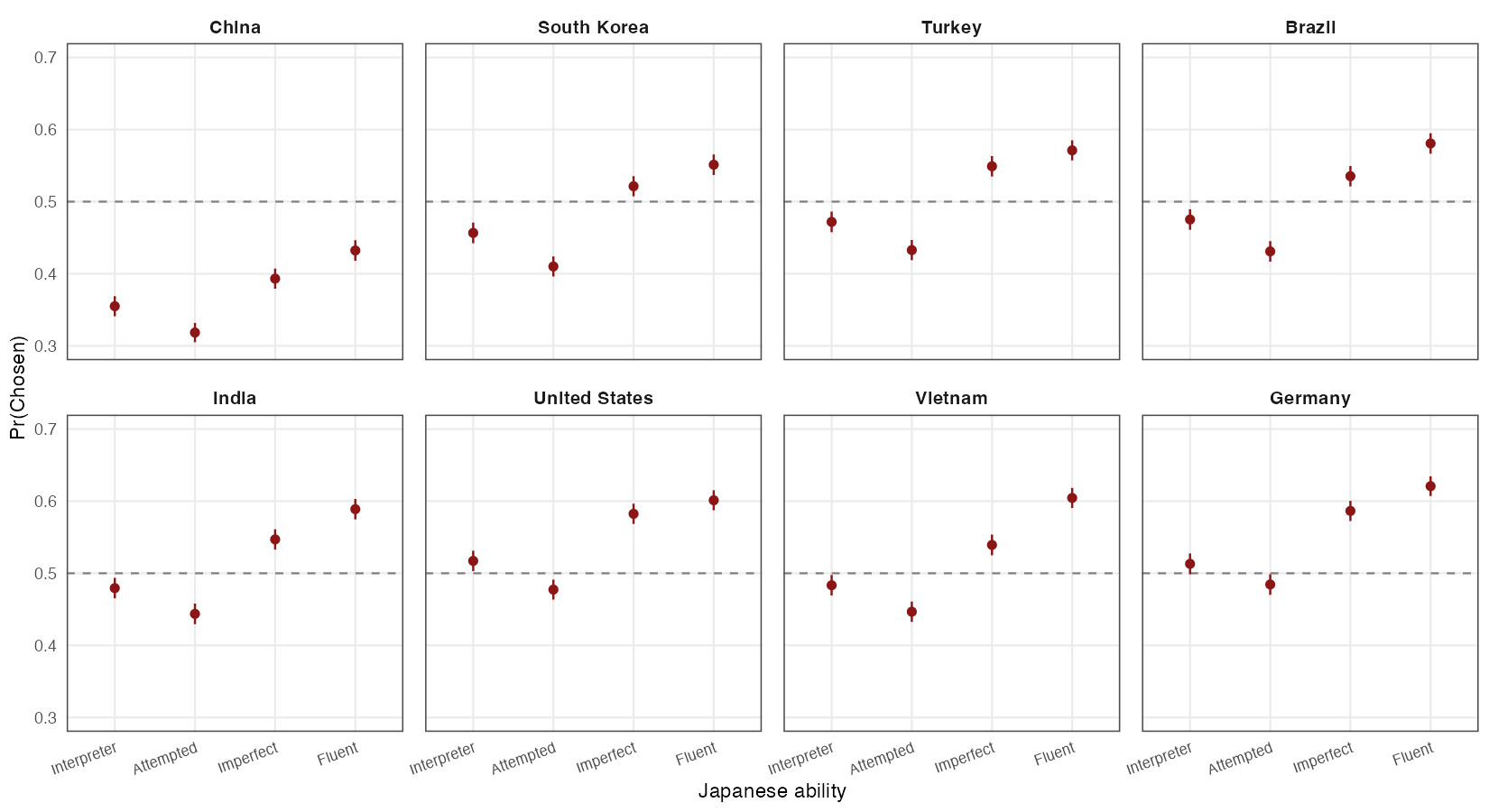
A recent Stanford survey about immigration shows that race isn’t a major factor in resistance to immigration. Rather, Japanese language ability is. In this chart, you can see how many more respondents chose to admit a hypothetical immigration applicant based on their ability to speak fluently.

Now, this might seem like a no-brainer. Of course, you want to admit people who can communicate with you. But “fluent” is doing a lot of lifting here that might not be obvious in English.
Japanese is classified as a “high-context” culture, meaning that a large amount of cultural knowledge is required to speak fluently. (Other high-context cultures include China, Korea, and many Arab countries.) There’s a lot of implicit communication, meaning context is often implied rather than expressed directly. Meanwhile, Americans, Germans, and Scandinavians (among others) are framed as “low-context,” meaning conversations tend to be explicit, with context usually spelled out.
Anyone who’s studied Japanese will know what I mean. We often leave pronouns and even subjects out, in casual speech. You’re expected to kuuki wo yomu – “read the air” and intuit meaning. So when Japanese say they want immigrants to master Japanese, they’re talking less about the linguistics of speaking than they are context – “the air,” in other words.
In a recent survey, 62% of Japanese reported that they wanted immigrants to not only follow the rules, but also “etiquette and customs.” Some interpret this as draconian or authoritarian, but I don’t think so. If you correlate it with that Stanford survey, you can see that once Japanese fluency is achieved, locals ranked people of a wide variety of ethnic backgrounds as acceptable (the dot at far right in each graph.)
Of course, not everyone in Japan agrees with this thinking. There are those who have a vested interest in keeping the definition of Japanese as strict as possible, who use foreigners as scapegoats for society’s failings, who wish to keep the number of outsiders who immigrate here as low as possible. The far-right party that rode an anti-immigrant platform to a surprising number of seats in parliament in the 2025 elections is one example. But I believe the winds are against people who think in this way. The demographics are against them. The technologies that let us cross borders physically, and share our ideas across them virtually, are against them. And most of all, I think our cultural traditions are against them. When our cosmology, so to speak, is so inclusive, it’s hard to square why our society should not be. Anyone who trumpets conservative values in Japan is eventually going to run up against that conundrum.
As a Japanese, it isn’t my place to say who is or isn’t an American. But I can say what I personally envision for my country’s identity going forward. I see it in little moments all over the city today. Non-Japanese employees greeting customers in polite Japanese. Foreign folks showing respect at temples and shrines. The caucasian man and his daughter I saw commuting to kindergarten on a mama-chari bike, her tiny pastel backpack slung incongruously over his big shoulders. In other words, the stuff of everyday life. To me Japanese isn’t what you look like; it’s how you act. In other words, it’s how you read the air.


I’m taking my three kids, ages 14, 12, and 10, to Japan for a couple of weeks. One reason I chose Japan is that they’re old enough to begin noticing that another successful modern society can organize everyday life around norms and assumptions quite different from the ones they know in the United States, including the kind of attentiveness to context captured by the idea of “reading the air.”
I’d be interested in any advice from Hiroko or other readers about experiences, places, or even small things to pay attention to that might help kids this age notice and engage with that aspect of Japan, without turning the trip into a forced educational exercise.
This seems to have a gap in there.
So if someone was writing a similar article about Germany (instead of Japan) and wrote "I recited the Pledge of Allegiance alongside the other students every day. But there’s no pledge of allegiance in German schools. The German flag wasn’t even displayed in any of my classrooms."...
...we would expect to see a sentence about how excessive flag waving patriotism in Germany is seen as reminiscent of the Nazis and the education system inculcates a culture of guilt and responsibility.
I don't expect to see a deep exploration of Japan's war guilt or lack thereof in this piece, but I do think the contrast with religiosity in Indiana leaves the mistaken impression that Japan never had a problem with monomaniacal devotion to something. It's like reading an article by a former heroin addict (who has been clean for decades) tut tutting someone about smoking marijuana. If they don't mention their own drug history, the article would come off as a little hypocritical.