

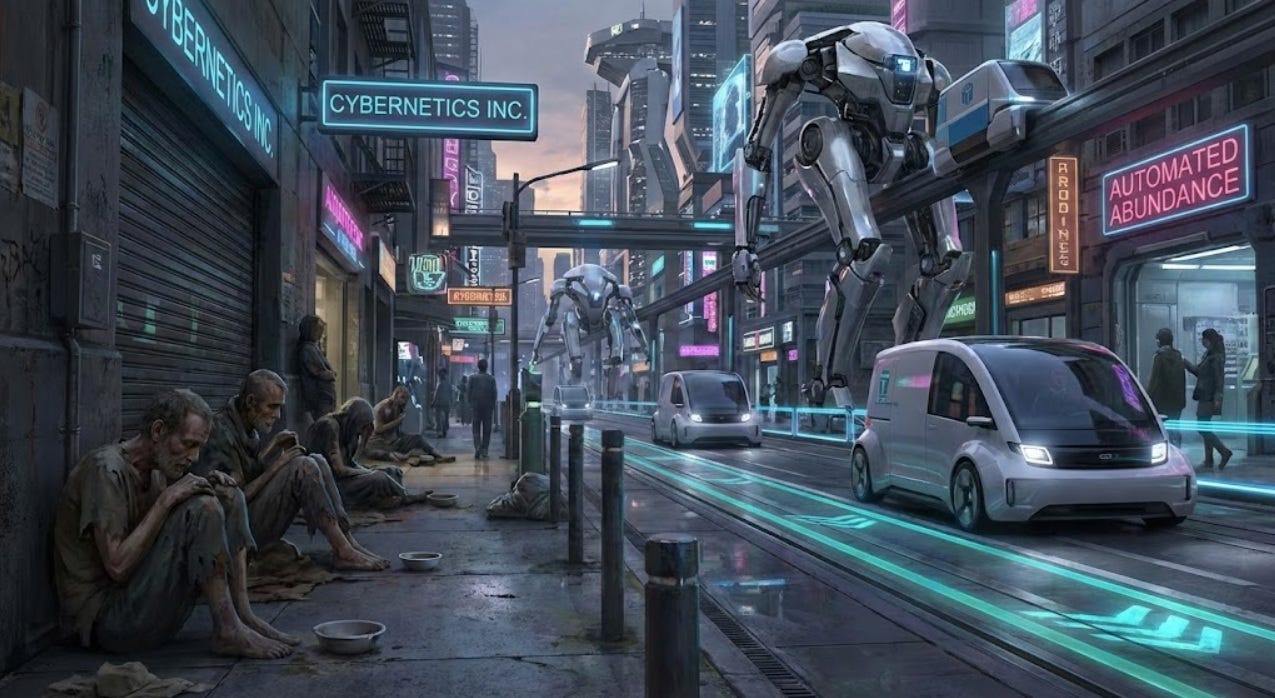
If you don’t like posts about AI, I have some bad news: For the next few years, there are probably going to be a lot of them. It’s not often one gets to live through an industrial revolution in real time, especially one that moves so quickly. There will be very few pieces of the economy — if any — that this revolution doesn’t touch, and it will have major implications for other things I write about (geopolitics, society, etc.). AI is not going to be a special, compartmentalized topic for a long time; it’s going to be central to a lot of what’s going on. If you find that boring, well, all I can say is, we don’t get to choose the times we live in.
Anyway, today’s post is about the macroeconomics of AI, so that’s fun. I started out writing about macro long ago, and I haven’t really kept up with it in recent years.
Every couple of weeks, someone comes out with a big post about how AI is changing everything, and the post goes viral and everyone talks about it for a few days. A couple of weeks ago it was Matt Shumer’s “Something Big is Happening”. This week it’s Citrini Research’s “THE 2028 GLOBAL INTELLIGENCE CRISIS” (yes, the title is in all caps):

The post paints a picture of a future in which AI disrupts lots of different kinds of white-collar work and service-industry business models in industries like software, finance, business services, and so on, and in which this disruption causes an economic crisis.
This is really two theses in one — a microeconomic thesis about which industries and jobs AI will disrupt, and a macroeconomic thesis about what this will do to the economy overall. People are debating both. For a counterargument to the idea that AI is about to take all the white-collar jobs, I recommend this post by John Loeber:

And I also recommend this post from January by Seb Krier, which of course doesn’t address the Citrini piece, but which does paint a vivid scenario for how humans might still have jobs in the age of AI.
I don’t really have a dog in this microeconomic fight, because, frankly speaking, I don’t have an expert-level understanding of either the industries or the jobs in question. It has been interesting to see the market react to the Citrini post, though. A bunch of software and finance stocks fell, including many companies that Citrini mentioned by name:
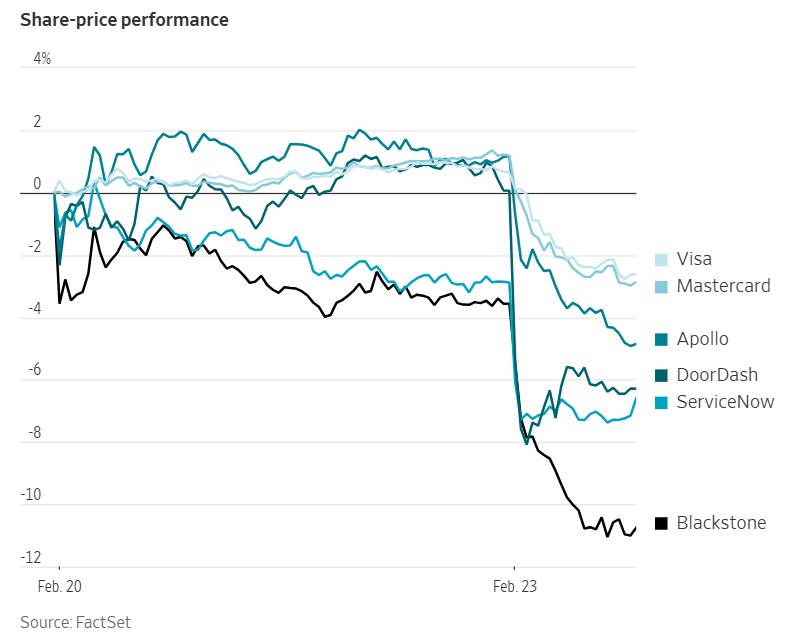
This is pretty interesting, from a finance perspective. It’s pretty normal these days to see companies’ stocks falling based on news of AI’s disruptive potential — IBM just fell when Anthropic revealed that its AI models can handle COBOL,1 and a bunch of cybersecurity stocks fell a few days ago when Anthropic’s models found a bunch of security flaws.2 But those were real announcements of model capabilities; Citrini’s post was just a scenario for how some current business models could be disrupted.
Was that scenario really news? Did none of the analysts tasked with keeping tabs on Visa and Mastercard stock really think about the possibility of AI disruption until a blogger sketched out a sci-fi future mentioning those companies by name? I have my doubts. Instead, this smells more like a wave of sentiment — basically, a bunch of traders read the post, got spooked, and coordinated their panic-selling on the stocks that the post mentioned.
(The inclusion of DoorDash in the stocks that fell suggests this as well. DoorDash is no marvel of software engineering; it was always easily possible to clone the platform even before AI. Its profits are based on a first-mover advantage and network effect, which Claude Code can’t simply conjure up out of nothingness.)
But in any case, time will tell whether Citrini was right about those companies and those business models. I have a lot more to say about the macroeconomic thesis — the idea that the rapid destruction of a bunch of American companies will cause a financial crisis and a recession. Citrini posits an unemployment rate of over 10% — Great Recession levels — as well as a drop in consumption.
Citrini doesn’t use an explicit macroeconomic model, so we can’t really see what assumptions they’re making; it’s not clear how they think the economy works in the first place, so we don’t know exactly why they think the economy crashes. But we can make a couple of guesses. In fact, I see two vaguely plausible ways that an AI-driven service productivity boom could actually end up crashing the economy. Neither one is very likely, though.
