

“The conservatism of a religion - its orthodoxy - is the inert coagulum of a once highly reactive sap.” — Eric Hoffer
“So now, less than five years later, you can go up on a steep hill in Las Vegas and look West, and with the right kind of eyes you can almost see the high-water mark—that place where the wave finally broke and rolled back.” — Hunter S. Thompson
It’s been a while since I wrote about wokeness and the culture wars. Back in 2021, I wrote several posts on the topic. In “Wokeness as respect redistribution”, I argued that America was ripe for social upheaval because its increasing diversity and gender inclusion in the 90s and 00s hadn’t been properly reflected in our culture or in our organizational hierarchies. In “Wokeness as old-time American religion”, I argued that wokeness isn’t a new thing or a European Marxist import, but a deep-rooted home-grown American ideology that resurfaces again and again throughout our history.
Now, almost two years later, I’ve had a chance to see how things have shaken out, and I think I have a more complete picture of where I think the saga of wokeness is headed. 2020 was the climax, 2021 was a major inflection point, and I think the story changes substantially from here on out.
A couple notes. First of all, some people see the term “wokeness” as a pejorative, but I don’t see it that way. I think it has its upsides and downsides. As Eric Hoffer pointed out in The True Believer, any crusading ideology has a tendency to go overboard, and yet without those ideologies it’s very difficult for society move forward. And if you like American civilization, then wokeness is something that you pretty much have to accept to some degree, because it’s a deep and fundamental part of that civilization.
The second note is that I’m not going to get sidetracked by trying to define exactly what “wokeness” means. In an earlier post I called it “the collection of social justice movements, discourse, and attitudes that has risen to prominence in America since around the mid-2010s”, and I’m happy with that definition; attempts to define the word rigorously inevitably go badly.
Anyway, with all that said, the point of this post is that wokeness’ role in American society is evolving as we move into the early 2020s. In particular, I see three simultaneous trends:
An increasing anti-woke pushback from conservatives
Increasing entrenchment of woke ideas and practices within liberal institutions
A general exhaustion with wokeness among thought leaders and young people
The fact that these three trends are all happening at the same time makes me think of the metaphor of a prairie fire.
Prairie fires burn hot at the edges and burn out at the center
I actually got this metaphor from an unlikely source: The Weathermen. If you read the book Days of Rage, or any other history of the radical group, you’ll see that the “New Left” ideology that the Weathermen embraced bore important similarities to 2010s wokeness (remember that Chesa Boudin was raised by Weathermen). In 1974, as the group was on the wane, they published a book called Prairie Fire: The Politics of Revolutionary Anti-imperialism, and eventually changed their name to the Prairie Fire Organizing Committee.
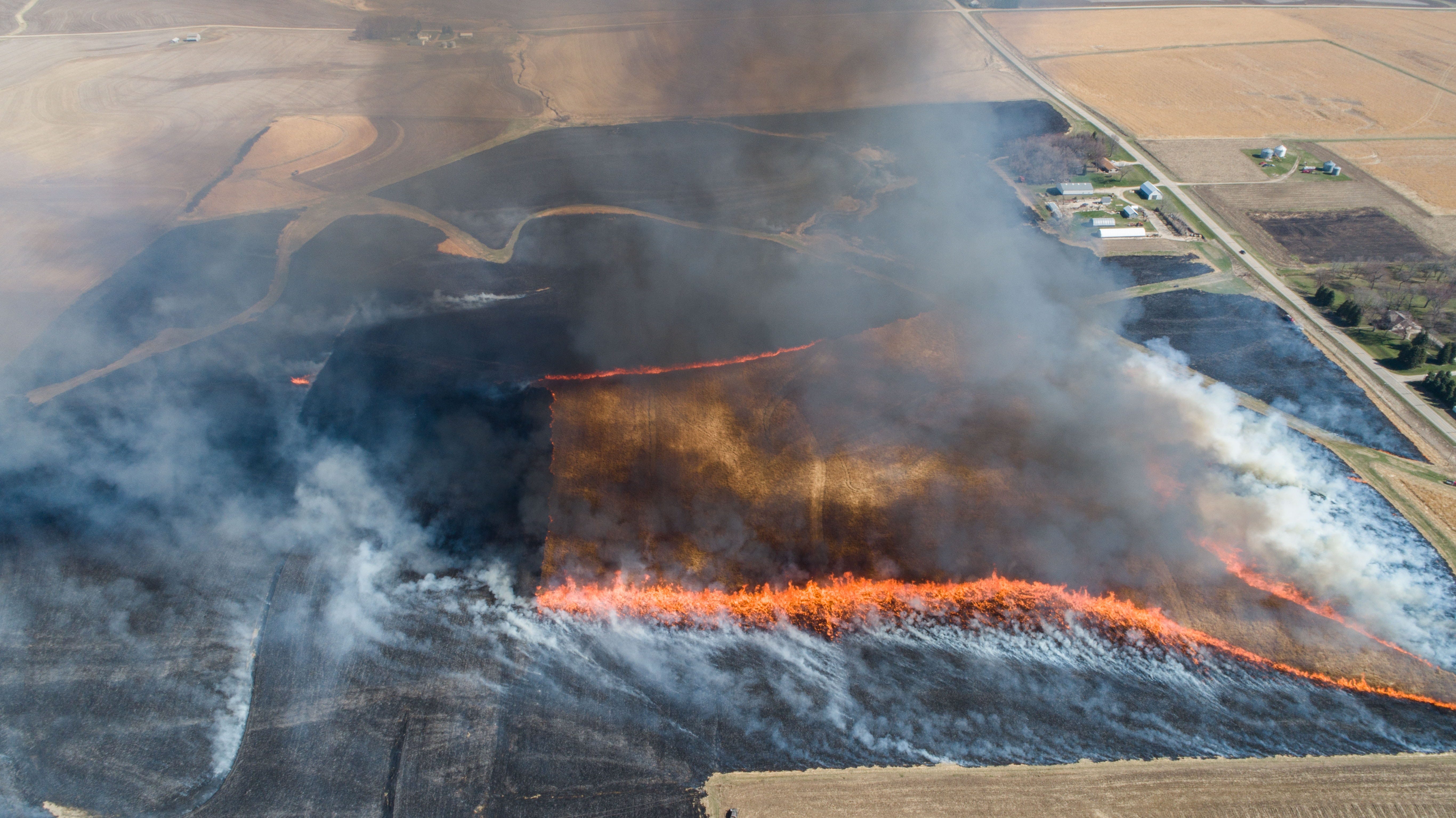
A prairie fire burns very quickly and eats up a lot of ground, which was undoubtedly one reason the Weathermen chose the analogy. But another feature of prairie fires is that they burn out very quickly. If you look at aerial photos of prairie fires, they look like a long ropy line of flames. This is because they consume the available fuel, so that the area that has already been burned smolders and then goes out.
I see something analogous with wokeness in America today. The “center” of the fire — the place it all started — consisted largely of two spaces that are very prone to activism and ideology. First, universities, which are always a hotbed of activism. And second, internet forums.
At American universities, the fire burned bright and hot in the mid-2010s. Students denounced professors and administrators over all kinds of things and demanded all kinds of cultural changes on campus and in society. Battles, sometimes violent, were waged over campus guest speakers. The climax of woke student activism undoubtedly came at Evergreen State in 2017, when massive protests shut down the entire college, and gangs of students with baseball bats were said to be wandering campus, smashing property and/or hoping to protect their fellow students from the forces of the establishment. Here was a famous (probably staged) photo from Instagram that captured the mood of the times:
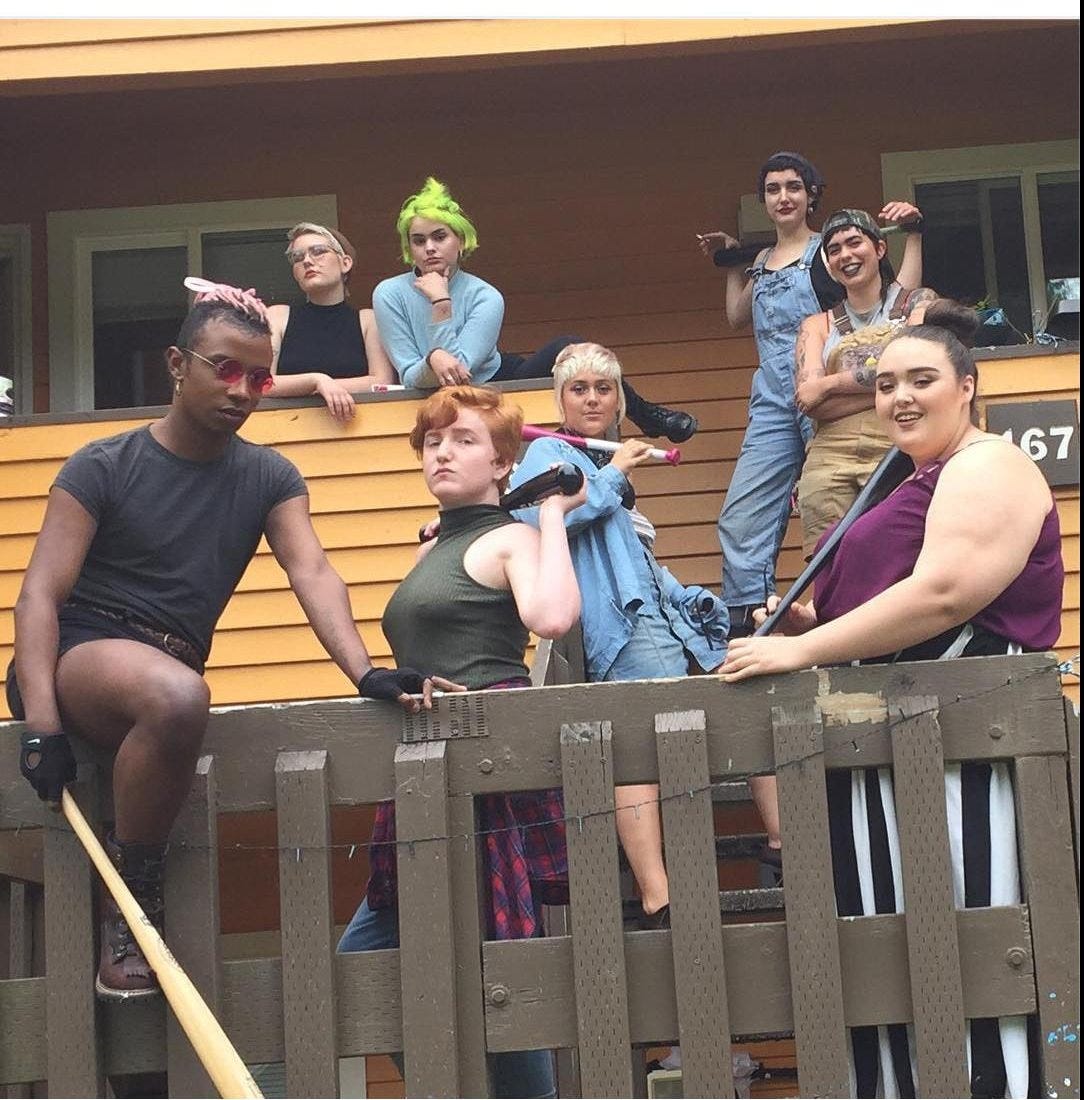
It looks like a cuter, more social-media-friendly version of the famous photo of the Weathermen’s “days of rage” protest.
But as in the 1970s, campus activism seems to have gradually waned. I can’t find reliable data on this, but you just don’t hear much about student protests these days, and certainly nothing on the level of Evergreen State. Activists themselves are complaining of a loss of energy. You can sort of see this in the Google Trends data too, where terms like “college protest” and '“campus protests peak around 2016-17:

Anecdotally, my friends in humanities departments tell me that activism has died down among grad students too, and mid-2010s-era woke language like referring to people as “bodies” is being abandoned.
The pandemic has got to be part of this — a year away from campus followed by continued social distancing restrictions probably took the wind out of activists’ sails (since activism is always to some degree a social activity). Another factor is that many universities were responsive to protesters’ demands, removing some of the impetus for further complaint. But I also suspect that part of what’s going on is simply exhaustion — memes get old, young people look around for the new thing.
The other place where the prairie fire began was in online forums — most famously Tumblr, but even earlier on LiveJournal, the Something Awful forums, and elsewhere. Note that these spaces had something in common with colleges — they were gathering places for a bunch of unsupervised young people with a lot of time on their hands. Later, essentially all of the super-woke folks, and their ideas, shifted to Twitter. Twitter was the online forum where random activists could most easily and directly challenge establishment figures, and where authority and hierarchy counted the least. It was the epicenter of hashtag activism and an organizing place for protests. It also had corporate management that was famously tolerant, and even supportive of, the woke movement (even if this sometimes embarrassed other movement sympathizers):


Anyway, that seems to be mostly over. Elon Musk’s takeover of Twitter convinced a lot of the wokest users that the site is a right-wing site now; some reduced their posting activity, while others decamped to Mastadon or back to smaller, more fragmented forums. The new management certainly tried to encourage this perception:
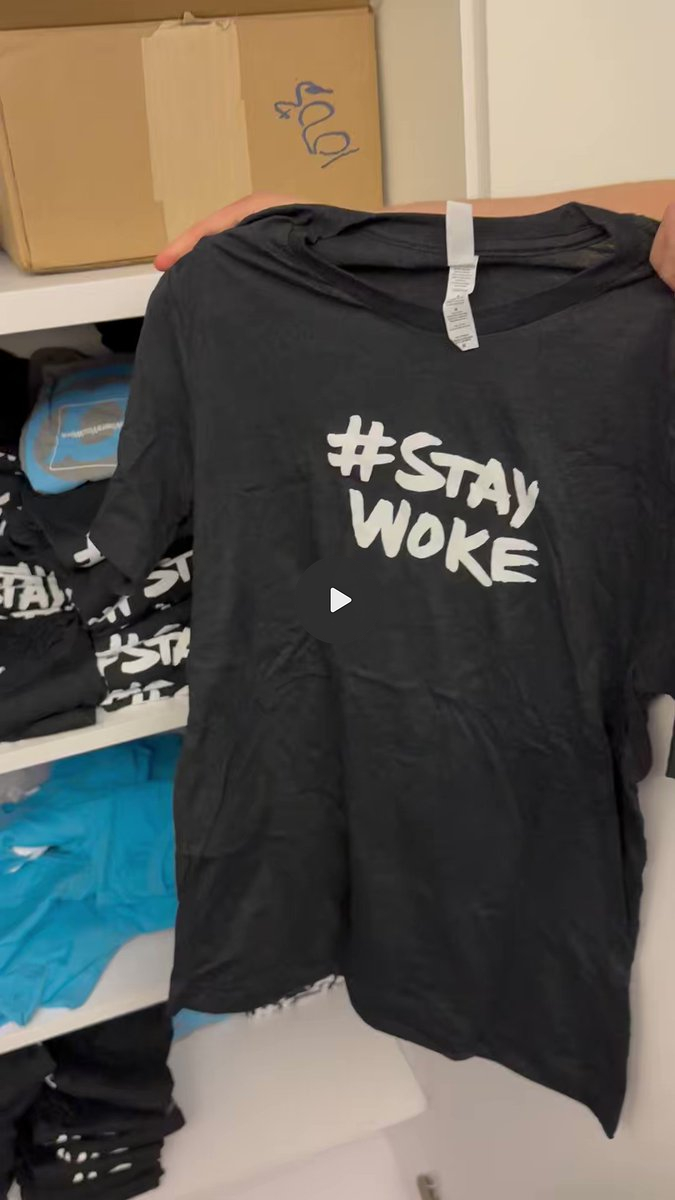
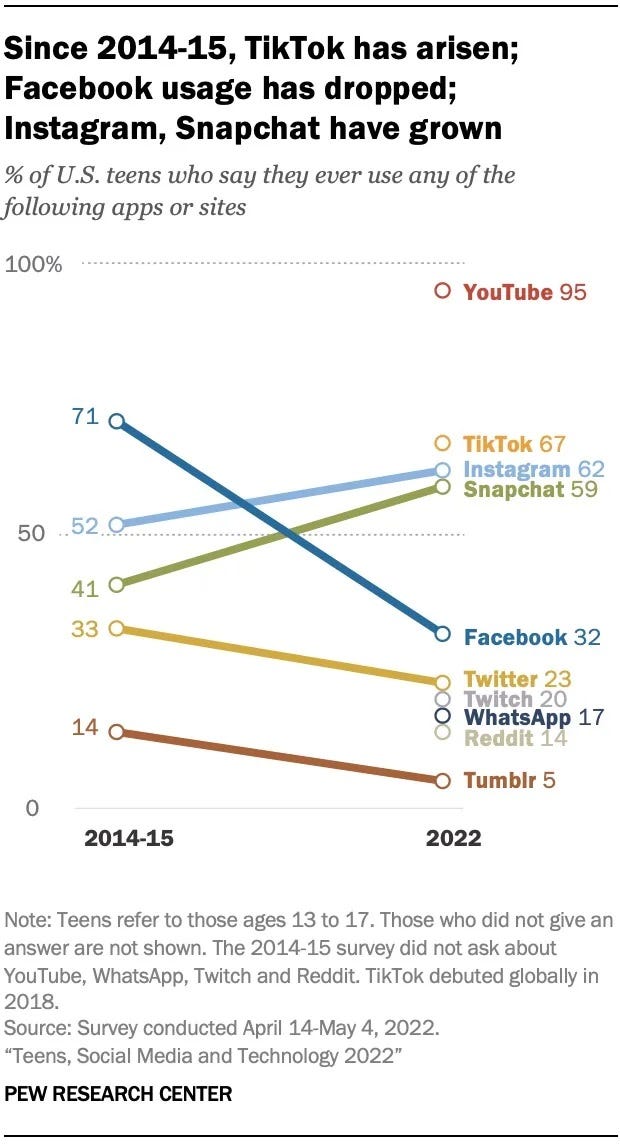
But even before that, one could feel the woke energy draining out of the platform. A lot of the most influential activist users had already left after 2020, the platform was trying to crack down on extremist dialogue of all types, and conservative activity had ramped up. More importantly, young people, who really drive activism and social movements, were abandoning the platform for newer and more interesting things:
On top of all these trends, there’s a tendency for movements that rely heavily on opportunistic denunciation (i.e., what we now call “canceling” and what 70s activists called “trashing”) to burn themselves out; once everyone either gets denounced or realized that they’re in line for denunciation, there’s just no more fuel for the fire. As in the French Revolution, the Cultural Revolution, or the internal infighting in 70s-era leftist movements documented in Days of Rage, at some point there’s just no one left to denounce. This summer, leftist writer Ryan Grim wrote a long and widely read article about how spirals of opportunistic denunciation have paralyzed leftist activist groups, prompting a rethink of the whole paradigm.
So the centers of the woke movement have been burning out, and no new centers of activism and energy have grown to replace them.
But at the same time, the fire line has moved out to the edges — i.e., to old people and institutions. Government agencies, including the military, have revamped and upgraded their diversity programs to echo the ideas unleashed by the activism of the 2010s, prompting anger from conservatives. Diversity training of the kind promoted by Tema Okun and Robin DiAngelo (two White women) has become ubiquitous in corporate HR departments, despite empirical evidence that it’s not effective. Woke language policing, once the province of kids with dyed hair, is now carried out by campus administrators and professional associations. In little towns across the country, school boards and city councils are fighting little battles over race and gender and other stuff that consumed student activists half a decade ago. University administrators now respond to even mild complaints by one student by firing lecturers and adjuncts at will. Woke manifestos that might have appeared on Tumblr in 2011 now appear in The Lancet.
To conservatives and anti-woke activists, this only indicates the ultimate triumph of wokeness — a sign that the ideology is still on the rise, that it’s not just a bunch of college kids anymore. But I see it very differently. Yes, it’s true that old people and their hierarchies and institutions proved no bulwark against the ideas of the 2010s. To me, this demonstrates the deep and fundamental appeal of wokeness — both its timeliness, and its resonance with essential American culture and values. The country’s hierarchies and organizations had become both ossified and aimless; they needed to shake things up, and in the United States of America, what tends to shake things up is a Protestant-derived social justice crusade.
But I believe that the burnout of the fire of woke activism at colleges and on the internet will be repeated in professional and corporate and academic and government institutions over the following decade. Old people are not as novelty-seeking as young people, but there are other factors working against a permanent revolution. Denunciation spirals burn themselves out the same way in a romance writers’ association or a knitting club that they do in a campus dorm or a Facebook group or a humanities grad program. The organizational paralysis that Ryan Grim described in his article will eventually force institutions to embrace pragmatism over ideology.
What’s more, I think that the gathering anti-woke movement on the political right will act as a sort of firebreak. Ron DeSantis may not be able to define “wokeness” in court, but his blundering attacks on “gender ideology” will focus progressive energy on fighting specific, pointed culture-war battles instead of finding new words to get offended by or forcing companies and universities to implement controversial new DEI programs. Even if progressives win those battles, they will have been forced away from advancing the woke causes they themselves would have chosen.
Another way the right will fight wokeness is by giving the general public a language with which to criticize the movement. I noticed this tweet the other day, and strongly concur:
Online spaces that once incubated wokeness now incubate the backlash; again, the fire burns out from the center. A lot of the stories I linked to above, regarding the many little institutional and local battles over wokeness now being fought across America, were from Fox News or other mainstream conservative outlets. The right’s political outrage machine isn’t what it was in the 80s and 90s, but it does still have a lot of firepower, and most of that firepower is now being directed at wokeness.
On top of all of that, the conservatives now have the Supreme Court and many federal courts on their side. SCOTUS is widely expected to strike down many (or all) affirmative action programs in the coming year, which may provide a precedent, or at least momentum, for legal assaults on DEI programs at companies and universities. As Wes Yang puts it, the Federalist Society has completed its long march through the court system.
The conservative anti-woke fightback will be excessive and cruel in many ways. But like a firebreak, it will slow the spread of wokeness to new organizations and institutions, forcing the crusading ideology to consume more of the fuel in areas it has already burned through. With conservatives blocking wokeness’ entry into school boards out in Oklahoma or Alabama, woke activism will be forced to focus on getting liberal universities to do yet more language-policing, yet more cancellation, and demand yet more DEI. Lacking the ability to strike at the targets they most despise, activists will have to attack targets of opportunity. And that will hasten the moment when liberals who supported wokeness in the 2010s are forced to say no to the latest demands.
In fact, I already see some small signs of this happening all around me. The San Francisco Elections Commission recently backtracked on a plan to replace elections chief John Arntz simply because he’s White and they wanted someone who wasn’t White. The city also saw successful recalls of its crusading DA Chesa Boudin, as well as three school board members whose activism ran afoul of the city’s Asian voters. Stanford University’s administration, after releasing a long list of common-use words that it claimed were offensive (including things like “American”, “prisoner”, “you guys”, “user”, and “walk-in”), was forced to withdraw the list after a national backlash.
(Update: Hamline University, which is being sued by a lecturer who was fired for showing a totally appropriate drawing of the Prophet Muhammad as part of his class, is now scrambling to walk back its accusations of Islamophobia. Expect to see more incidents like this, as old people in positions of power try to be woke and basically faceplant. Young people are losing interest in this kind of outrage activism, and when old people in positions of power try to do it, it just comes off as strained and fake — in addition to often running afoul of the law.)
Prairie fires burn out from the center. And if legendarily woke places like San Francisco and Stanford are signaling that they have had enough of cultural revolution for now, it seems like only a matter of time before cities and institutions across the country reach a similar conclusion. I often predict that the 2020s will be like the 1970s, and this is one more similarity I expect to see — a general rollback of woke changes in the latter half of the decade.
But the rollback will only be partial. Wokeness, remember, emerged for a reason; there will be no going back to the institutional or cultural status quo of 2012, just as Reconstruction didn’t entirely roll back the changes of the Civil War and the 14th Amendment, and just as the 80s didn’t entirely roll back the changes of the 60s and 70s. When the dust settles, wokeness will have changed our society in important and lasting ways. I’m not such a Panglossian as to think that all of those changes will be universally or completely for the better, but I do think that the necessary changes will be a bit more likely to survive than the excesses.
In a future post, I’ll talk about what I think those enduring changes will be.
Update: Musa al-Gharbi is coming out with a new book about wokeness in which he makes a similar argument to the one in this post, but with more data than I’ve presented here. Here is an article where he summarizes his work. Some excerpts:
It’s been ten straight years of heightened unrest in knowledge-economy institutions and knowledge-economy hubs. However, the wave has now begun to crest. We can see this in polls and surveys. White liberals, the Americans whose expressed views shifted most radically over the last decade, have begun to moderate their responses to questions, for instance, about the causes and ideal remedies to racial inequalities. There have been shifts in the ways people identify themselves, too. For instance, polling and surveys suggest that “feminist” and related labels seem to have lost some of their luster in recent years, including (and perhaps especially) among young people.
Data on media outputs and “cancel-culture” incidents also suggest that a corner may have been turned. Across a range of datasets, we see apparent declines in “grassroots” attempts to censor uncomfortable speech on campus (even as there are growing attempts to suppress political scholarship from external stakeholders). Media discussion of various forms of prejudice and discrimination also seem to have declined significantly over the last year.
Al-Gharbi also alleges that wokeness is losing its hold on companies. In the article, he doesn’t really talk about academic departments and scientific associations, public schools, or government agencies; I’d argue that at these slow-moving “edges” of U.S. culture are still in a 2010s mindset. But al-Gharbi’s data definitely bolsters my argument that wokeness is burning out at the “center”.
Hey folks! For some reason I selected "comments off" when I published this, but now comments are back on!
I certainly hope Noah is right about the general direction of the change. I'm a vanilla liberal who agrees that woke perspectives have been a valuable new lens of American social thought, but I think the rhetoric and tactics of the movement have been net self-destructive for at least the past half-decade.
The prairie fire metaphor is attractive and fits one type of overview, but, to use a hydraulic overlay, there are many different eddies swirling in places as distinct as Florida and Portland, and I'm not confident any current trend will not be reconfigured by some specific outbreak of woke/anti-woke headlines that breaks a new channel for extremist polarization for both elements.
I think one thing that may be having a significant woke-calming effect is the realization by progressives that extremism on the Right is successfully lighting more and more of its own ground on fire, and that it's more like a forest with plenty to burn. Given the distribution of arms in this country accelerationist tactics will not benefit the woke (or anyone but the extreme Right). That realization may engage increasing segments of the woke Left in aligning with the liberal (old- and new-style) center (or I'm wishfully dreaming).
The Hamline affair may have a positive effect because its extreme challenge to consensus values (free speech / academic freedom) comes at a time when woke extremism is beginning to recede. It may serve as an object counter-lesson, whereas five or six years ago it might have been a rallying point for the woke movement.