

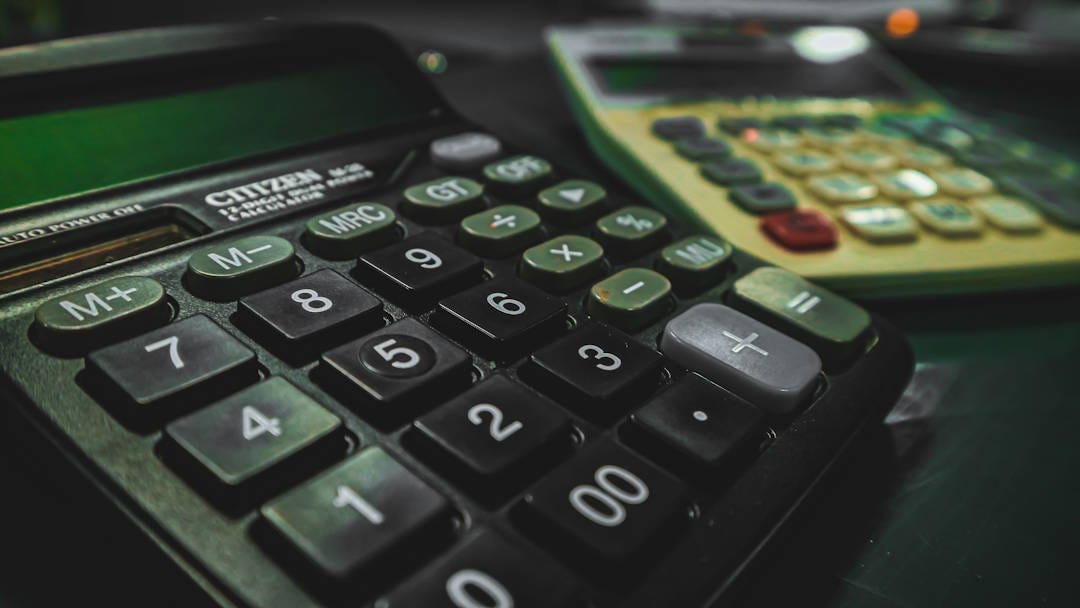
I had a great-uncle who was a “human calculator”. It’s an odd, rare ability that allows people to multiply large numbers quickly in their heads. I remember using a hand calculator and seeing if my uncle could get it right without a tool faster than I could; more often than not, he could.
Human calculators used to be very valuable as employees, back when calculation was done by hand. Today they’re just a curiosity. Technology came along and superseded that particular human ability, as it has so many others. The story of John Henry being superseded by the steam drill, or Paul Bunyan by the chainsaw, is a metaphor for the march of progress. In some cases, like Garry Kasparov or Lee Sedol losing to computers at chess and Go, the moment really happened.
This week marked another important such moment in the history of man versus machine. OpenAI announced that its new model, Astra, managed to solve ten major outstanding problems in math and theoretical computer science. Here’s a simple explanation of the problems. The general consensus seems to be that these are extremely important, stunning breakthroughs.
This does not mean that computers are now capable of doing every kind of math better than humans can. Some people have argued that AI is good at results where the solution can be found by reading the entire literature and combining existing insights — exactly the kind of thing you might expect a computer to be superhuman at — but still not as good as humans at making truly novel leaps of insight. This may represent a real, general limitation of LLMs’ capabilities — as Tom Zahavy of Google DeepMind put it, it may still be the case that “LLMs can’t jump.”
But the trend line is becoming clearer. The University of Toronto’s Daniel Litt, one of the most prominent skeptics of AI’s potential for frontier math research, recently conceded a major bet about what AI could do:


Litt appears to no longer believe that there is any important type of math that AI won’t soon be able to do, writing: “The models don’t yet seem able to do certain kinds of high quality research, but I also expect this is a matter of (not too much) time.”
Some mathematicians have reacted to this development with despair. Kirwin Hampshire’s post is probably the most evocative and the most well-read:

He writes:
I am suffering a profound spiritual crisis due to these developments. I have been screaming internally for days. It feels as though I am living inside of a nightmare…For me, the affective quality of learning mathematics is empathetically tethered to an act of discovery and creation…If The Library of Babel existed, would authors continue to write books?…
Perhaps I shouldn’t tell you this, but my aim is to be open: These developments have triggered some deranged thoughts in me. I have wondered if it is the express goal of these companies to make me kill myself…The story of human discovery and the triumph of the human spirit will soon be excised from this discipline…[T]he process of prompting novel proofs will be as auraless as ordering doordash. Watch as magic and mystery evaporate. Watch as the sun sets on our heroic age…
There is nothing I can do. There may be nothing you can do. I have no prescriptions, policy recommendations, or coherent call to action. I just want to be honest and open about my emotional and spiritual response. I want to feel seen….I need the architects of our new mathematical paradigm to look me in the eye and acknowledge our shared humanity and soul before they deliver the coup de grâce.
Math PhD student Tasmin Chu, meanwhile, urges a more confrontational path, calling on mathematicians to avoid working with AI companies and to aggressively preserve the way that math research is currently done. This seems extremely unlikely (and would fail if it were attempted), but it demonstrates the depth of emotion out there.
Even the mathematicians who don’t share Hampshire’s despair have expressed alarm at the sudden disruption of their profession. The entire way that mathematical research works — training grad students, working on problems, collaborating with colleagues, building theories — is going to have to be overhauled.
I’m not a mathematician; I never have been. I can’t fully understand what mathematicians are going through right now. But I do have a few thoughts on what AI’s supersession of human mathematics research means for our species, so I thought I might as well share those. Some of these ideas are a little vague and half-formed, and for that I apologize in advance.
Heroism has to change
Humans have always valued standout individual achievement — heroism. We pride ourselves on being able to do what no one else could have done, and we heap status and respect on people who make standout achievements. But this was always a little bit of an illusion; most of what we did was always a collective enterprise. Workers work in teams, and those teams rely not just on the resources of their organizations, but on the smooth operation of a whole network of other teams and organizations all over the world. Even the most heroic entrepreneur stands on the shoulders of a vast number of workers; Elon Musk could not build a rocket, nor could Jeff Bezos create Amazon Web Services. And neither SpaceX nor Amazon could have been built in Somalia.
We always bridled at being reminded of this; when Obama told entrepreneurs “You didn’t build that”, he was making the anodyne point that organizations and institutions matter, but people still got very mad. We motivate ourselves with our own sense of heroism, and to be reminded that we’re cogs in a machine greater than ourselves makes life seem a little less meaningful.
The scientific enterprise was also always mostly a collective one. If you look at what almost any scientist does, they’re simply adding a little bit of data to our pool of collective knowledge. Almost all research is incremental stuff — a slightly novel experiment, a little wrinkle in an existing theory — and many published research findings are false, and yet the scientific enterprise collectively gropes its way toward the truth. Even Nobel prize winners are often just managers of huge teams of researchers who never get gold medals or get to give speeches in Stockholm.
In essence, humans were always what we now call edge compute — little devices that reported data back to a central world-mind. Except the world-mind we reported to wasn’t a computer; it was society itself — the network of corporations, governments, universities, and human networks that disseminated human knowledge and coordinated our actions. We started off by learning pieces of what the world-mind already knew (i.e. education). Then we walked around and saw slightly different things, had different experiences, chewed on tiny bits of bigger problems, gathered a little new data, and so on.
We mixed our tiny bits of unique experience with what we learned from the world-mind, and the resulting product was slightly novel because our individual experiences were unique. Then we reported this slightly-novel mix back to the world-mind — with scientific papers, PowerPoint presentations, office conversations, memos, and so on. The world-mind reassimilated our contribution, and learned, and grew a little bit wiser.
But there were a few of us who really did get to be heroes — or at least, a bit more heroic than the rest. Whether because of greater raw ability, or a luckily unique perspective, there were some people who could do things that the entire rest of the world couldn’t do. There are examples from politics and business and art, but there was always something special about the heroes of mathematical theory. Isaac Newton invented calculus and classical mechanics all by himself. Grigori Perelman, sitting in his little room in Russia, solved a famous math problem that had bedeviled the entire profession for decades. Andrew Wiles did something similar a generation earlier.
These advances weren’t done ex nihilo, of course — every great discoverer and inventor stood on the shoulders of proverbial giants. But in mathematical theory there was almost always some nub of hard work, some brilliant leap of genius, that belonged to one person alone. Some part of the excitement of becoming a mathematician surely had to do with the dream of becoming one of those heroes, without whom a great discovery simply couldn’t have been made.
But that heroism was necessary because of an inherent limitation in the way the old world-mind was built. Society is far more complex than any single human, but it requires individual communication in order to transmit ideas. A mathematical theorem has to be expressed in terms that one grad student can learn, or one professor can teach to another. This meant that every idea that got added to the collective ultimately had to be comprehensible by a single human being.1 Which meant that it had to be initially conceived of by a single human being as well. The people who conceived of those almost-impossible-to-conceive ideas were our heroes, and mathematicians were perhaps the most heroic among them.
We normally think of AI as something that replaces a single human worker, but I think that’s the wrong way to think of it. AI is really a new world-mind — a technology that takes the accumulated findings of individual humans (or robots, or other sensors) and integrates them into a general picture of the world. AI uses all of human knowledge as its training data; each time one of us reports a new scientific finding or expresses a new perspective, that adds to AI’s knowledge and understanding of the world. This is what people mean when they say to “write for the AIs”, but in fact every scientist and every businessperson is just writing for the AIs now, whether they intend to or not.
(I actually think of a financial analogy here. Before the crash of 2008, most financial derivatives — the complex CDOs and such that ended up being involved in the crisis — were traded over-the-counter, by people calling up other people and selling them products. After the Dodd-Frank legislation, trading of most derivatives shifted to central clearinghouses. The shift from human organizations to AI as our coordinating superintelligence feels a little like the shift from OTC information exchange to a central clearinghouse.)
But unlike human society, AI doesn’t need heroic human geniuses. Its ability to understand complex ideas is not limited by the ability of a single human brain to apprehend, intuit, or communicate those ideas. The information bottlenecks that our greatest mathematicians were able to slightly widen have now been done away with completely — or will be soon.
That doesn’t mean human scientists and thinkers have become irrelevant. At least for now, AI still requires us to provide the role of edge compute. We go out into the world, discover new facts, mix them with our unique individual experiences to form new perspectives, and communicate all this back to the AI world-mind. For most people — even most scientists — this is basically the same thing they were doing before, except instead of a group of their colleagues at a seminar, they’ll be reporting their findings to AI.
And for lots of scientists, AI’s mathematical prowess is going to open up a new golden age. Math was always one of the hardest parts of science; it’s something our brains aren’t naturally adapted to. Now that constraint is alleviated. Economists don’t have to worry about wracking their brains writing theory sections; they can focus on getting data and understanding empirical results. Przemek Chojecki writes:
From a perspective of science or mathematics (not mathematicians), this is the best time ever. AI will lead us to the new age of mathematical discoveries and boost science progress 100x.
Whether it’s 100x or 1.5x remains to be seen, of course. But the point is that people for whom mathematics is an input to understanding the world, rather than an output, just gained access to an incredibly powerful tool that makes their lives much easier. For most people, math was always a burden, like stamping metal or drilling holes. Now that burden has been alleviated by machines.
At least until systems of robots and sensors eliminate the need for human research labor, most scientists will get to be a little more heroic than before. They’ll be like the characters in Star Trek — exploring the unknown with the aid of unfathomably powerful machines.
But mathematicians, and anyone else whose sense of accomplishment came from being the indispensable solvers of hard theoretical problems, will have to learn to get their sense of self-worth and accomplishment from other sources. Jacob Tsimerman, who just won the Fields Medal and promptly took a job at OpenAI, sums it up:
I do not do mathematics only to find truth. I do it largely because I enjoy it and I am good at it. I also find it beautiful and am grateful I get to spend my days understanding beautiful things. But I enjoy the challenge, the process, resolving confusions, finding strategies, grappling with problems…There are many people whose primary enjoyment of math comes through problem solving in one of its incarnations. If that disappears, that is not a trivial issue and many of them might not want to do it anymore.
So what will mathematicians do in the new AI age?
Mathematicians after the age of heroes
First of all, let me say that I do not think AI will take mathematicians’ jobs. I sometimes say that it will, but this is a joke. Even if AI is able to do 100% of what mathematicians do today, I believe that mathematicians will continue to be employed, as mathematicians, if they want.
The reason is that mathematicians, as a class of people, are actually incredibly cheap. The sum total of all of the salaries of academic mathematicians in the U.S. is maybe $4-5 billion dollars at most. That’s a rounding error on our GDP — it’s about what we spend on bowling alleys, or Halloween candy. And to be brutally honest, only a few of those are actually doing frontier research — most are employed mainly as teachers. On top of that, it’s an open question whether most of the frontier mathematical research being done by the very best mathematicians is actually producing value for money in economic terms — other than some cryptography and the occasional physics application, there isn’t much use for most frontier math.
In other words, we already employ most mathematicians because we think human understanding of math, even without industrial applications, is inherently worthwhile. That isn’t likely to change in the age of AI. Even if AI “discovers” a vast number of new mathematical results, most people won’t care; what will be important is that some human understands what AI has discovered. And yes, our society — which AI will make even richer than it is now — will be willing to pay the pittance it costs to keep human mathematicians employed as professional math-understanders. For the overwhelming majority of people, that situation will feel no different than what prevails today.
This is actually a point a lot of people have been making:

Just because you press a button and make AI solve a problem doesn’t mean you understand the solution, and it doesn’t mean you immediately have an idea of what other problems you’d like solved. Mathematicians have been given an incredible new tool to understand the world — like miners getting hydraulic excavators or powered drills — and since the amount of math out there to be discovered is probably infinite, using that tool will take a lot of work.
For those mathematicians whose sense of wonder and meaning comes primarily from learning new things — who do math to “find truth”, in Jacob Tsimerman’s words — life will only improve. And while that won’t be as heroic of a job as what math research used to be, it’ll still be a prestigious one, because most humans will still be unable to do it. Even if any high school kid can press a button and solve the Riemann Hypothesis, the output will just be gobbeldygook to them.
And mathematicians who enjoy the extreme mental difficulty of math will still get to enjoy it. AI will make any given math problem a lot easier to solve, and it’s generally a lot easier to understand a solution than to find one. But AI will also come up with — and will allow humans to come up with — much harder problems than have been created so far. There will be problems so difficult that even understanding AI’s solutions will be as hard for a human as solving the Jacobian Conjecture without the aid of a machine.
As for people who just intrinsically enjoy the old way of discovering math, this will turn into a hobby, or a sport. Just as there are still sprinters even though humans can’t outrun cars, there will still be mathletes. And just as there are still woodworkers even though machines can probably do a better job, there will still be smart people who try to solve math problems without the aid of AI.
So mathematicians will still be able to get paid to do math. They’ll still be able to learn new things, have fun, and get respect from society. The only thing they’ll really lack is heroism — the knowledge that their own special, rare natural abilities alleviate a key bottleneck to human flourishing.
But that’s not so bad, really. Most people never get the chance to be heroes. Truck drivers don’t. Financial advisers don’t. Executive assistants don’t. They have to find meaning just from being regular people — from taking care of their kids, having friends, having hobbies, joining civic organizations, getting involved in politics, and so on. It’s not such a terrible fate.
Well, maybe not. Society can handle ideas more complex than a single human can understand, but those ideas have to be able to be broken down into pieces that a single human brain can comprehend.
"Most people never get the chance to be heroes. Truck drivers don’t. Financial advisers don’t. Executive assistants don’t. They have to find meaning just from being regular people..."
This is where I think are missing something, Noah. You are thinking too much about the particular -- mathematicians and the world stage -- as opposed to a painful generality.
My Dad, for example, was an anonymous worker for an ultimately failing corporation, Yet, consider this: When he was long retired and mostly housebound with serious ailments, my brother and I talked him into one last short visit to a nearby nature preserve. Where several people whispered among themselves before coming over and asking reverentially, "Sorry to intrude, but aren't you ______________"
You see, he was known as the authority on identifying birds. LOCAL authority. (And of course, only known among the modest percentage of people in the area who were into nature.)
But his remarkable knowledge of bird song and plumage provided him with status. And, like so many other particular abilities that provide status, technology has since rendered that ability irrelevant. Screens keep people inside, and, for those that still experience nature, there are apps to identify the birds. And plants. And most everything else.
People need status in the same way that they need love and belonging and security and stimulation. And they obtain it by getting a reputation for being good at something.
Given the global reach of our communications system, I understand your focus on a global example -- world class mathematicians' despair at the threat to their world class status. But exactly the same thing has long been happening as rapid technological advances trivialize abilities that previously offered status -- hard earned status -- on local and family levels.
Diagnosis of engine problems by sound, smell, and feel. Beautiful handwriting and perfect spelling. Reading of the night sky. Cooking by feel. Knowledge of roads, landmarks, shortcuts. In these and myriad other cases, skills that were scarce and thus offered status were replaced by something that made the scarcity disappear.
For me, it says it all to note that far younger people than myself are already bemoaning that internet-related skills that arose in significance after my retirement are now being eclipsed by further technological progress.
Don't misunderstand, I am not saying that we should or can hold up technological advances on this account. Do that, and other civilizations will dance on our graves. But by the same token, saying that people "have to find meaning just from being regular people" is a statement blind to actual human nature, akin to saying "obese people will have to find satisfaction from eating celery."
Rather, the agony of these mathematicians ought to be taken as offering insight as to the widespread despair in our society, despite most people living in unprecedented material comfort and security.
“We motivate ourselves with our own sense of heroism, and to be reminded that we’re cogs in a machine greater than ourselves makes life seem a little less meaningful.”
It’s similar to how many religious people of yore thought that by seeking to understand the universe in scientific terms would strip all the wonder, meaning, and beauty from it…and, uh, nope. The universe described by science is awe inspiring, gorgeous, and fucking nuts!
I guess I’m saying that having better tools to go farther down the rabbit hole has always made the world more interesting and inspiring.