


There are three basic facts you need to know about the U.S. macroeconomy right now:
The economy overall (growth, employment, inflation) is doing pretty well.
Productivity growth is unusually high.
Job growth is terrible.
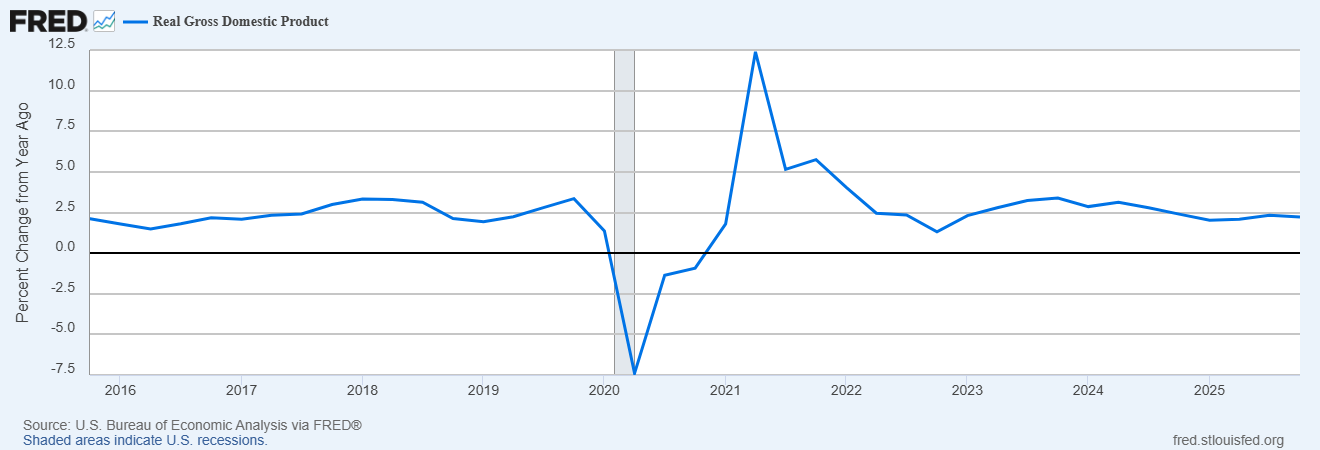
Let’s start with some numbers. Late 2025 is the latest number we have for GDP growth, but it looks pretty solid — around 2.5%, about where it was in the late 2010s.
And most people still have jobs. Prime-age employment rates — my favorite single indicator of the labor market — are still really high. Higher than any time in the 2010s, actually:
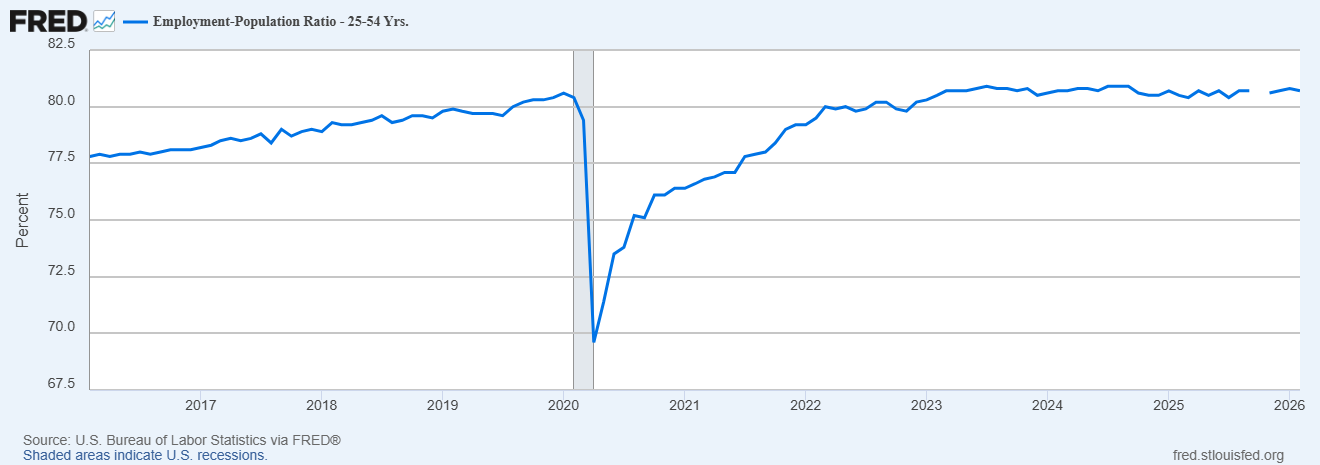
If you look at unemployment, you can see a slowly rising trend since mid-2023, even if you restrict it to the prime age group. But this is entirely due to more people saying that they’re looking for work — prime-age labor force participation has been steadily rising. So that’s not very scary either. It’s just more of the people without jobs saying that they’re looking for work, instead of just sitting around.
Meanwhile, inflation is still in the 2.5% range — a little higher than we would like, but not particularly fast.
So in terms of the headline numbers, everything is kind of just bumping along. From a bird’s-eye view, this economy looks pretty normal and healthy. Under normal circumstances, I’d be inclined to not even write a post about the macroeconomy this month.
But underneath the surface, two interesting things are happening. The first is that productivity growth has accelerated; the second is that job growth has stalled out. On its face, this sort of pattern might suggest that AI is finally starting to take Americans’ jobs — and lots of people are suggesting this conclusion. But when we look closely at the numbers, the story becomes more complicated.
Productivity is booming
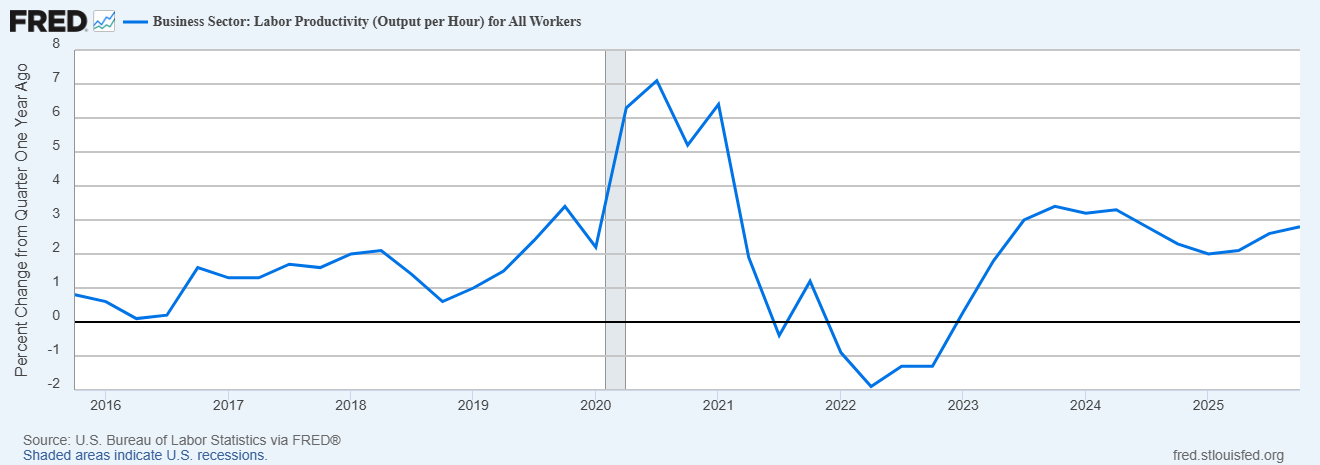
The first is that productivity growth has accelerated. Output per hour — also called “labor productivity”, which is sort of a quick, rough-and-ready measure of productivity — is growing significantly faster than it was in the late 2010s. It’s been at around 2.5-3% since late 2023, compared to more like 1-2% during Trump’s first term:
In fact, productivity is well above where economists thought it would be six years ago:
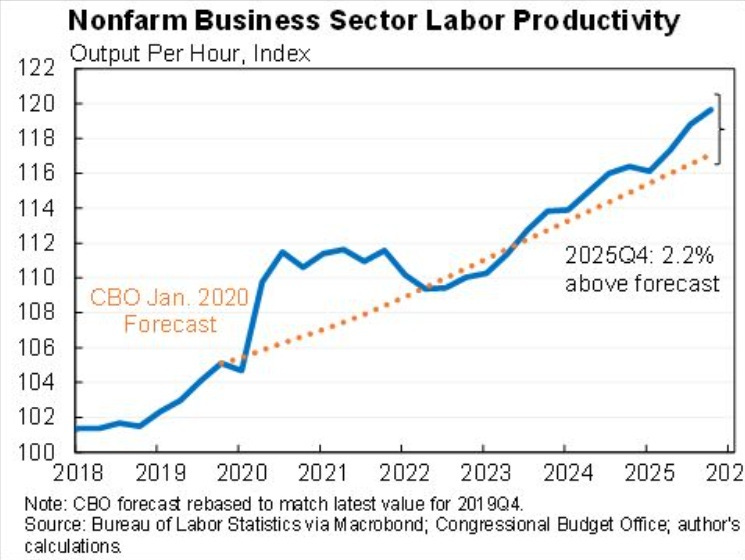
That’s a major acceleration. 2.8% labor productivity growth is about equal to the best decades we’ve seen since World War 2. If that rate is sustained for a decade, or accelerates further, it’ll be pretty historic.
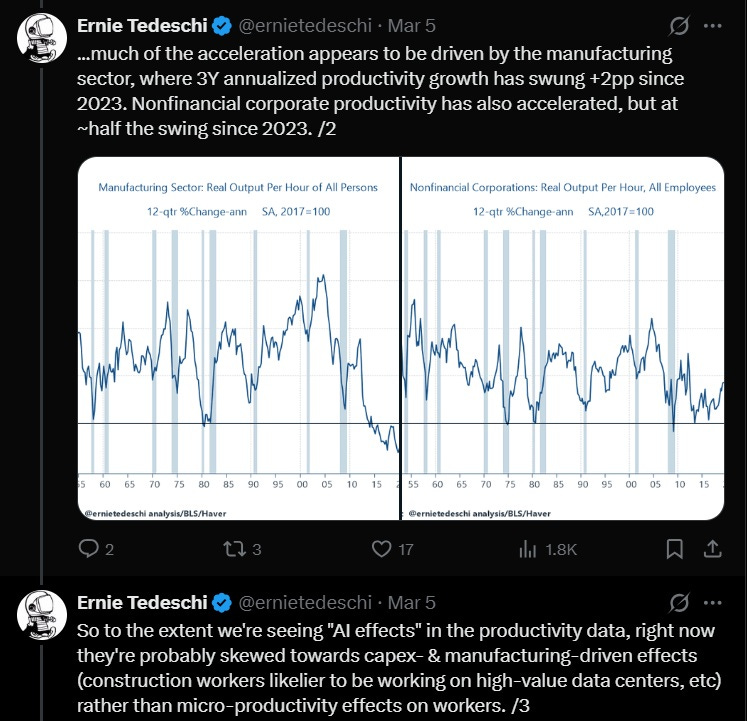
What’s driving the productivity boom? It’s tempting to conclude that AI is making white-collar workers more productive, but Ernie Tedeschi points out that the biggest swing has been in manufacturing productivity. For a long time, manufacturing productivity was basically flatlining in America; now it’s suddenly growing again.
Tedeschi argues that this is also probably AI-driven, but it’s not about people using ChatGPT and Claude Code at work — it’s about the fact that a ton of data centers are being built, and data centers are very valuable:
If you look at data centers’ contribution to growth itself, it looks pretty small, but this masks the value of the computers contained within the data centers. Together, the creation of data centers and computing equipment have been contributing about as much to GDP growth as they were during the dot-com boom:

A second thing that’s happening is that American capital is being utilized more intensively — machines are being run for more hours of the day, buildings are keeping the lights on longer, and so on. The San Francisco Fed makes monthly estimates of Total Factor Productivity growth — productivity growth once you take the amount of labor and capital into account — and they find that it’s been pretty fast since late 2023. But once you take utilization rates into account, it looks like there was a moderate burst of TFP growth in 2023-4 that faded in 2025:
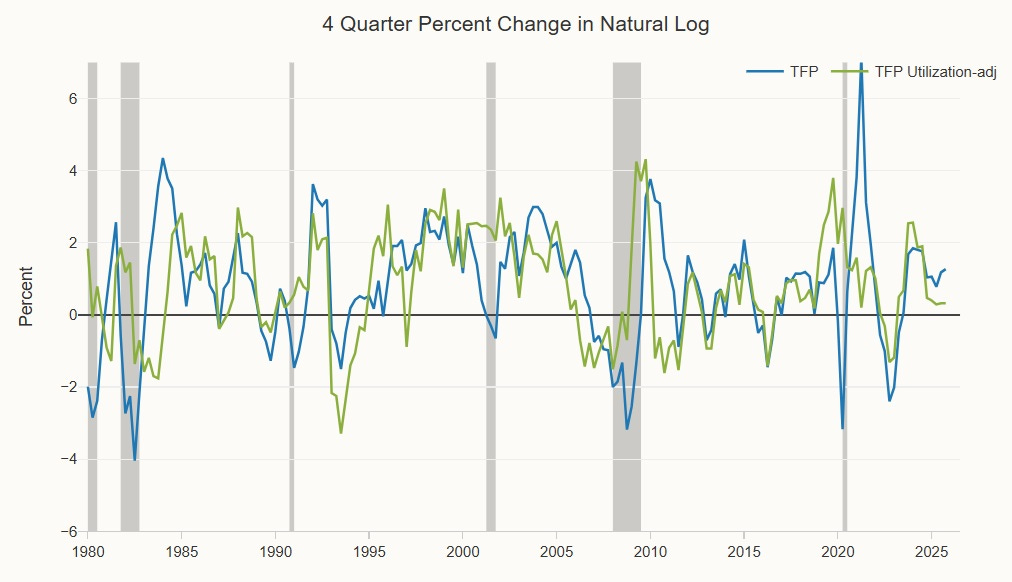
This is also consistent with the story that the data center boom, not an AI use boom, is driving fast productivity growth in America.
