


A little over a year ago, a bunch of people were worried that the AI data center boom would result in an epic bust, much like the railroad bust in 1873. I wrote about the possibility at the time:

The basic idea is that even if AI is an incredibly useful technology and creates enormous economic growth in the future, the people building the infrastructure (data centers) might borrow so much money that they can’t pay it back in time. Last summer, the AI industry’s revenue was growing, but not nearly as fast as the amount of money being spent. But the “hyperscalers” building the data centers were mostly spending their own cash instead of borrowing money, so the danger wasn’t imminent. The worry was mostly about the future — if spending continued to increase and revenue didn’t accelerate, there could be an 1873-style bust.
Well, now it’s the future, and two things happened. Spending did accelerate, and hyperscalers started having to borrow money to keep increasing their spending. But revenue accelerated even more. The release of Claude Code, Codex, and other agentic coding tools proved to be the “killer app” of AI, and suddenly Anthropic and (to a lesser extent) OpenAI were rolling in cash:
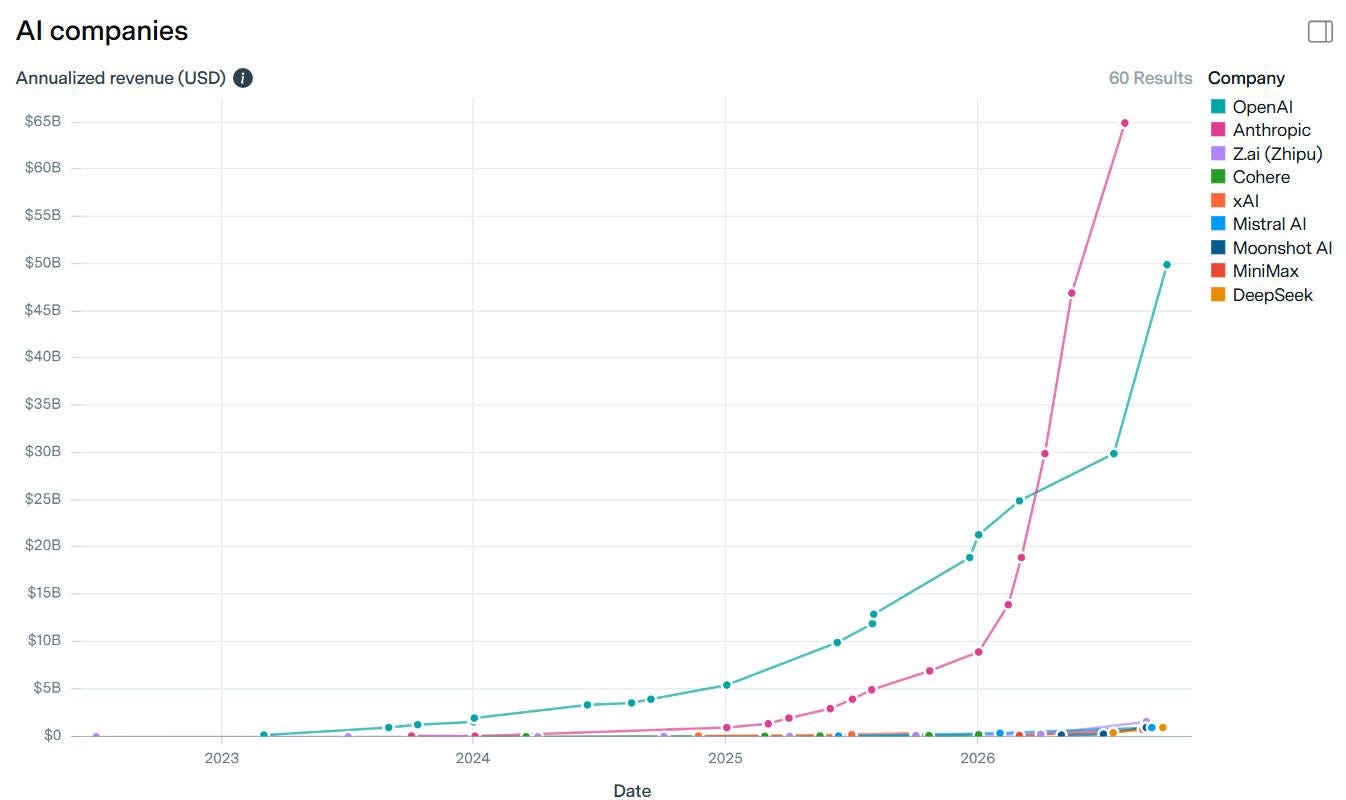
So like in summer 2025, we aren’t obviously heading for a big AI bust in the near future. But the stakes are higher now — because companies are borrowing a lot more money now, any slowdown in the torrid pace of AI revenue growth could cause a blowup.
The amounts of money being thrown around here are just staggering. A year and a half ago, the AI boom was still significantly smaller than the railroad boom of the late 1800s, as a percent of GDP. Now, there’s an active argument as to which one is bigger.
Which is bigger, AI or the railroads? (a pointless but fun debate)
This debate doesn’t really matter, because the basic message is just “Wow, it’s a lot of money.” But it’s fun to look at the numbers people are throwing around. Stijn Van Nieuwerburgh gives figures of 3.63% of GDP for AI and 2.24% of GDP for railroads:
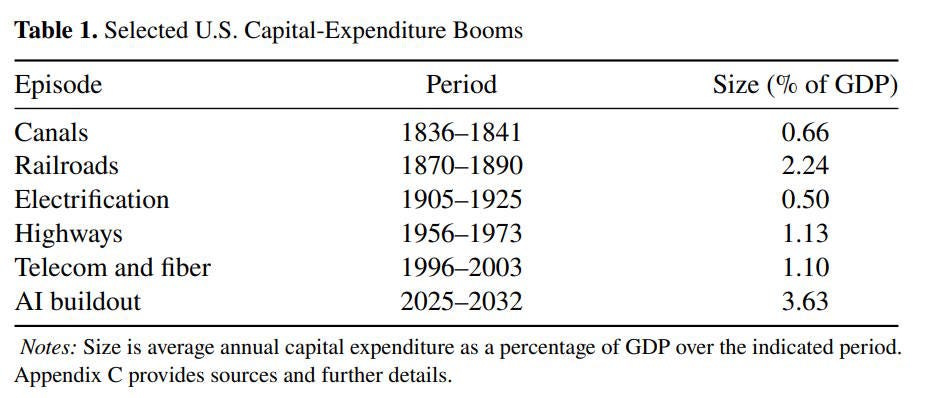
But those percentages are over different amounts of time — the railroad boom lasted a very long time. According to some data sources, railroad spending peaked at around 5.4% of GDP:
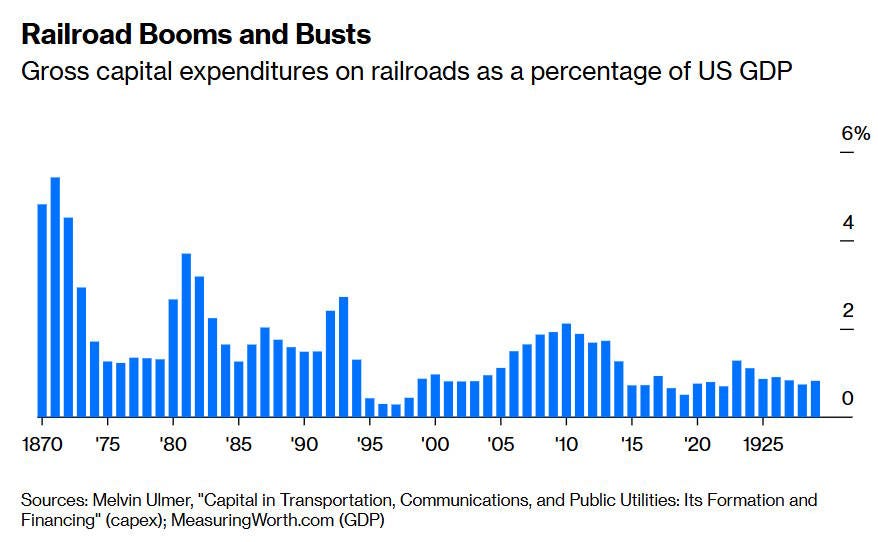
And 19th century data are notoriously patchy and incomplete. Some sources claim much higher numbers for the railroad buildout:


Nor do people agree on the size of the AI investment binge. Some sources yield numbers that are much lower than Van Nieuwerburgh’s:


As far as I can tell, the main difference here is assumptions about costs. The banks and ratings agencies are using announced dollar spending; Van Nieuwerburgh is using announced physical construction projects and then making assumptions about how much those projects will cost. The biggest reason he gets a higher number is that he assumes data centers are going to cost a lot more than the hyperscalers think.
Meanwhile, Dylan Patel claims over 6% for the AI boom already, once you include all types of AI-related infrastructure — fab equipment, chips, energy, and so on.1
But whatever the correct numbers are, the basic point remains the same: AI is now one of the two biggest infrastructure booms in American history, by a large margin.
So it’s understandable that people are worried that the two booms could follow similar paths. For the railroads, that path included a big crash in 1873, which caused a huge decade-long depression in the U.S. economy. A lot of people are watching for something similar to happen with data centers, and the chorus of skeptical voices is beginning to swell again.
Hyperscalers are starting to borrow…a lot
OK anyway, on to the real point of this post. The flood of revenue that accompanied the rise of coding agents quieted the talk of an AI bubble for a while, but now it’s back. The first reason is the rise of AI-related debt. In the early years, the hyperscalers — data center builders like Amazon, Google, Meta, and Oracle — mostly paid in cash for the data centers. These companies get tons of cash from their software and cloud businesses, and they ended up spending most of it on AI infrastructure. But now the buildout has gotten so big that they’re having to borrow a bunch of money to keep ramping up spending:
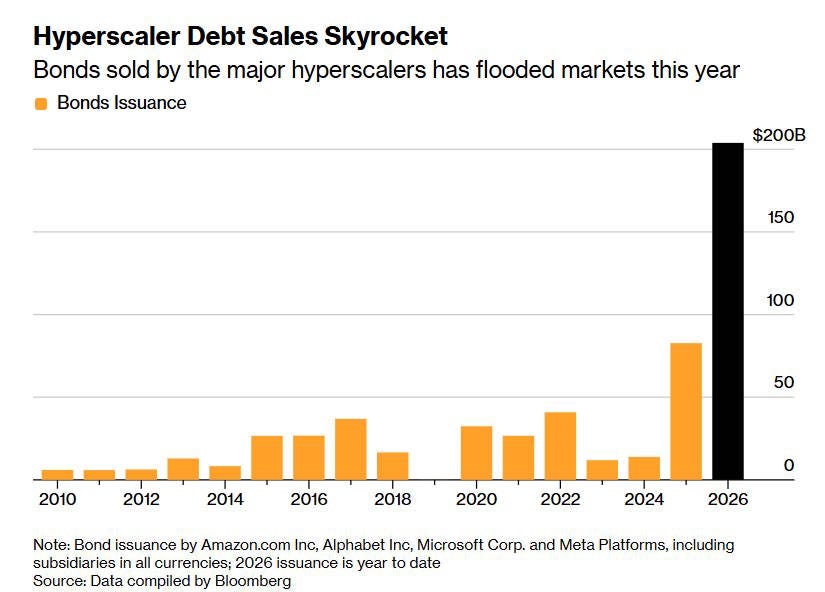
For all of the hyperscalers except Microsoft, free cash flow either went negative in recent months or is expected to go negative late this year. This has been a giant boon for semiconductor companies — Nvidia, TSMC, and the rest:
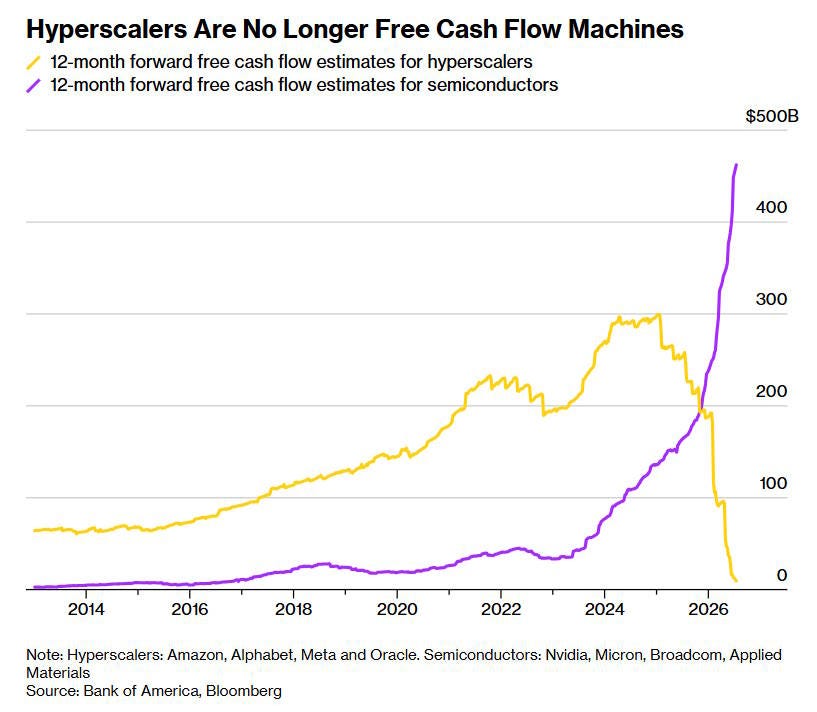
All this debt creates a financial danger that didn’t exist before now. When they paid in cash, hyperscalers were safe — if AI revenue disappointed, their stock prices would go down, but their businesses would just keep going and they’d eventually recover their profitability. But the more hyperscalers borrow, the more revenue they’ll need just to stay solvent; if the revenue doesn’t arrive, they might have to default on their debt.

